Oxford Spires Academy Year 10 work experience week - what the students thought

We had 11 students from Oxford Spires Academy for a week of work experience. They spent 5 days from 10am to 2.45 pm at Wytham doing various activities in the Woods, and talking to the people who worked there. They met, and learned about the work of, the Conservator, the administrator, an entomologist, two of the foresters, the Director and Manager of the Hill End Outdoor Education Centre, two of the farm workers, two of the citizen science contributors, the bushcraft expert, and a bird/small mammal research assistant.

For activities, we navigated round the site on some fairly long walks, did some path maintenance at Hill End, visited the farm to learn about their regenerative agriculture approach, put up a huge parachute shelter between the trees, and on the final day cooked a meal for the students themselves and for the researchers on site.

I asked the students to write their own appraisal of themselves. I also asked them for a recommendation to others about Wytham Woods, and feedback on what we could improve in a work experience week. There wasn’t much negative feedback and it was all about the length of the day (they got tired), and the muddy paths (they didn’t all have appropriate footwear, but they managed).

The students’ voices

Student 1 said –

I believe that I did amazing and engaged with all the activities and work. I also was very helpful. An example is when I helped Kim move the parachute and help her find it and when we were making food in the kitchen I cut most of the vegetables. I did not refuse not did I complain about anything all week. When we were setting up the parachute and when we fixed the path in Hill End, I did not stop working and I tried my best at everything. My attitude has also been positive towards all the staff and I showed my respect towards them.

I really enjoyed coming to Wytham Woods and having the opportunity to work here. I enjoyed this because it was really fun and we did a lot of walking and we did not waste any time or our work time. I also really liked how we all got to listen to the staff talking about what they do and what there jobs were.

Student 2 said –

I had a great time at Wytham Woods learning and seeing nature right in front of me. I also enjoyed meting many experts, who have advanced knowledge and intelligence on the specific category. I have tried to contribute at my max potential. For example, the task we were assigned to do at Hill End. I have gained a lot of knowledge and experience in nature.

Wytham Woods in an exceptional place for older children to teenagers to visit. It has many activities to take part in like sightseeing, hiking, camping, and many more. It gives you a different perspective to the wildlife and nature. Overall I think this place is an amazing place to visit which I recommend to students and also adults to visit and possibly stay.

Student 3 said –

My name is xxxxx. I am 14 years old and I go to Oxford Spires Academy in Oxford and I sort of like it. At Wytham Woods I learnt how to work in a team, make new friendships, always be patient and to motivate each other when down.

You should come to Wytham Woods because it has beautiful views and activities. It is also a great place to come sightseeing and experience a peaceful time. There lots of facts you can learn and teach to other people.

Student 4 said –

Through the week I managed to arrive on time every day. I loved walking round the Woods and looking at all the different plants and wildlife. I also tried very hard with the shovelling when we were laying the paths, which I found very fund. I also liked going through mud and helped with map reading and figuring out which paths to take. I got involved with all the tasks and put in lots of effort and also volunteered for lots of different things. I was very respecting of the woodland and wildlife and I also behaved very well all week. I learned lots about the research that takes place in the Woods and was very interested to listen to people talking about their jobs and roles in the woodland and farms. I think the week provided an excellent insight into working at Wytham Woods and also what it is like to work in a woodland environment.

Student 5 said -

Throughout the trip I really enjoyed the walks through wood and there memorising surrounding views. There was a lot to see and admire about the area from its scenic view to lush green forests. Our place of stay was really nice and comfortable. We also had the availability of Internet which really helped with a place of interest and sacred signal. I liked the activities we did although they were hard but we're nice.

Student 6 said –

My name is xxxxx. I am 15 years old and I got to Oxford Spires Academy and I’m in year 10. I like to play football in my spare time. During my stay at Wytham Woods I did lots of working and lots of different activities. We went over to Hill End where we put woodchip on to paths.

I think young people should come to Wytham Woods because it’s a lovely place out in the open. It’s got lots of nature and different habitats, and its good for sightseeing and just having a walk. It’s also got lots of different animals and birds which live here, so if you like animals, Wytham Woods is a great place to come.

Student 7 said -

In this work experience I think that I have tried to contribute and complete the tasks I have been assigned. The things I was given to do I think I completed them very nicely. During this entire week of work experience I have gained a lot of knowledge on what the adults go through daily to provide food and things for their families.

Wytham Woods is an area for teenagers to explore the wildlife and see what there is outside the streets. This place is very inspirational for young adults which helps them do or clear the things they want to do in life. This area helps the teenagers to mature and get an idea of how actual jobs work and how easily you could get fired.

Overall this place is a wonderful area that is nearly perfect.

Student 8 said -

I think the work experience in the Woods was good because we all worked together as a team and had fun. For example we cooked together and make the parachute cover and went to Hill End and digged up soil.

I found the trip fun and exciting. I liked it when we walked around the woods and it was very calm and relaxing as you could hear the birds and everything. It was nice when we also went to the farm and saw the cows from afar. You should come to Wytham because there are lots of trees and wildlife to look at and enjoy It’s a quiet and calm place and there is lots of nature.

Student 9 said –

In my opinion I did the best at both behaviour and curiosity as I asked intelligent and interesting questions for example I know that Wytham Woods is globally recognised and under Oxford University for research on the exotics. In terms of behaviour I made a successful attempt on bringing out the positive side of me despite gruesome and deep mud and steep hills that show up non-stop.

As a member of generation Z, I’m more or less on technology most of the time, and taking this 1 week job of Wytham Woods (OX2 8QQ), has really changed my view of nature and made me appreciate the natural world that may soon go and allows me to cherish the memories of the beautiful woods. I think Wytham Woods will increase the mental health of young people and raise awareness that will hopefully bring down the destructive situation known as global warming.

 Student 10 was too distracted to write anything but was an amazing young man with huge energy, sense of responsibility and a natural leader.

Student 11 was also fabulous, open to ideas and learning. He had to leave early so could not complete the assessment.

Discussing Nature and Climate books at Wytham Woods

It was a calm Sunday morning round the camp fire at the chalet at Wytham Woods. 10 of us gathered at the chalet in the Woods, where the fire was lit, and hot drinks and cake awaited. We had each brought a book, loosely related to nature or climate, to tell other people about. It was a wonderful wide ranging discussion about books from novels and poetry to field guides and economics. We covered over 20 different books, in enough depth to whet the appetite to go away and read them - that seems good value for a book club!

The event was organised by me, Kim Polgreen, Youth Educator in Residence, and Alice Little, Writer in Residence at Wytham Woods. It was such a delight to share thoughts, hopes and fears with others who are also interested in these topics. We are going to do it again on 15th May!

The books that were discussed and recommended are as follows. The links are all to www.bookshop.org which supports local independent bookshops.

The Peace of Wild Things. Poetry. Wendell Berry.

Engish Pastoral: An Inheritance. James Rebanks.

Losing Eden: Why Our Minds Need the Wild. Lucy Jones.

If Women Rose Rooted: A life-changing journey to authenticity and belonging. Sharon Blackie.

Big Panda Tiny Dragon. James Norbury.

Swimming with Seals. Victoria Whitworth.

All We Can Save: Truth, Courage and Solutions for the Climate Crisis. Ayana Elizabeth Johnson and Katharing K. Wilkinson.

Turn the Tide on Climate Anxiety: Sustainable Action for Your Mental Health and the Planet. Megan Kennedy-Woodard and Patrick Kennedy-Williams.

The Hidden Life of Trees: What They Feel, How They Communicate. Peter Wohlleben.

Who Owns England?: How We Lost Our Land and How to Take it Back. Guy Shrubsole.

Doughnut Economics: Seven Ways to Think Like a 21st-Century Economist. Kate Raworth.

A Wood of One's Own. Ruth Pavey.

The Overstory. Richard Powers.

The Wood: The Life & Times of Cockshutt Wood. John Lewis-Stempel.

The Salt Path. Raynor Winn.

Wintering: The Power of Rest and Retreat in Difficult Times. Katherine May.

The Last Wilderness: A Journey into Silence. Neil Ansell.

Dream Island. Ronald Lockley.

The Walker's Guide to Outdoor Clues and Signs: Their Meaning and the Art of Making Predictions and Deductions. Tristan Gooley.

RSPB Handbook of British Birds. Peter Holden and Richard Gregory

The Unofficial Countryside. Richard Mabey (Author) Mary Newcomb (Illustrator).

Diary of a Young Naturalist. Dara McAnulty.

Finding the Mother Tree: Uncovering the Wisdom and Intelligence of the Forest. Suzanne Simard.

Braiding Sweetgrass: Indigenous Wisdom, Scientific Knowledge and the Teachings of Plants. Robin Wall Kimmerer

Teacher training in Wytham Woods - making the most of Geography Field Trips

What parts of the Geography KS3, 4 and 4 curricula could you cover in taking your students to a British woodland? And how? That was the question I had to research in preparing for a group of Oxford University Geography PGCE interns last week. The answer turned out to be quite a few, and the interns themselves came up with many ideas themselves.

On a walk round the Woods, we discussed physical geography concepts in the curriculum - landscape, topography, rock and vegetation types, farming practices and soils, ash die back disease, climate change impacts and climate change research, water cycle, flooding, and water pollution issues. For human geography we discussed who walks in the woods, how they get there and where they come from, the impact of human infrastructure and activities on the wildlife and landscape, and the control of deer. In a landscape like this, physical and human geography are closely intertwined.


Once back at the Chalet, the research station in Wytham Woods, over coffee and biscuits we discussed risk assessments, and behaviour management, and how to get the most out of a day in the woods for the wellbeing of students and teachers. My top tips are

  • Prepare yourself so that you feel confident. Doing something like a bushcraft or foraging course means you will recognise hazards and feel less fearful of what is around you. An outdoor first aid course should be on every geography teachers’ to do list.

  • Visit the site beforehand if you can. Do a detailed risk assessment, and think about your contingency plan in the event of your worst case scenarios. Discuss this with the colleagues who are accompanying you. Have a clear plan of who does what in the event of an incident. And discuss approach and tone, and how to keep everyone confident and happy.

  • Have lots of empathy for your students - consider how they are feeling about their trip - prepare them for what is coming by making triple sure they have everything they need, showing them a video of the site, inviting students who might have been there before to come and talk to them about it. Maybe ask them to anonymously say what might be worrying them and discuss those worries as a class.

  • On site, act as a team with the students. Engage them in carrying kit, navigating, identifying risks etc. Celebrate their nature identification skills, or drawing skills, which might be better than yours. Set the tone by being relaxed and enjoying your surroundings.

  • Make sure that the student know to have their phones with them, charged, switched on and NOT on silent. This is counter-intuitive to them when they are in school mode so you have to make the point. Have their numbers, and make sure they have yours (probably a school phone). Make sure yours is charged and on.

  • Ask students to choose a buddy for the day to keep an eye on, and then buddy up the pairs and give them responsibility for the other pair, and then allocate a teacher to as many sets of 4 as you have students. When on the move make sure a teacher is stationed at the back - and concentrating on not letting any student get behind them.

  • Make the most of the wellbeing opportunities by scheduling in time for sitting and relaxing, doing sketches or taking photographs.


Back outside, we tried out some carbon cycle and water cycle fieldwork measurements - it’s not as easy as it looks to lay out a 25m square in the woods!

The treat at the end of the day was a climb up to the canopy walkway to admire the woods from above. Thanks to Alex Black from the School of Geography for making sure we were safe.

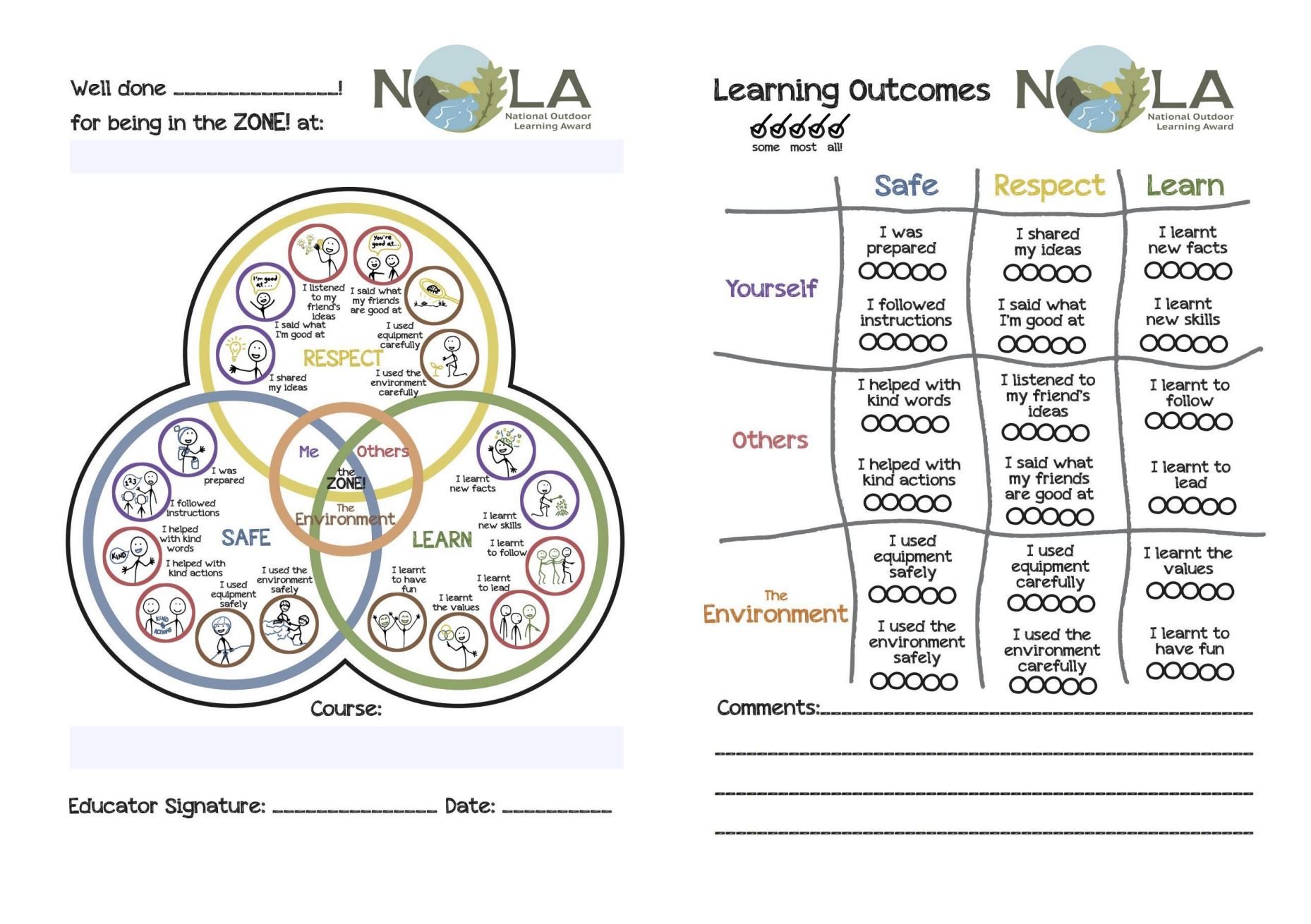
Finally, we used the National Outdoor Learning Award as a way to review the day, and to illustrate how it could be used with students.

SDG15 Life on Land: a talk for an IB School Conference

Kim Polgreen, February 2022

I was honoured to contribute to a schools sustainability conference on 12th February 2022, organised by the XXI Century Integration International School, an IB school in Moscow. 30 IB schools from around the world attended. The students, and teachers, had some really interesting observations and questions.

My topic was Sustainable Development Goal 15: Life on Land. As a starting point for explaining it I used this: SDG Resources for Educators - Life On Land (unesco.org)

I started my presentation talking about some of the work at Wytham Woods where I run education projects. I used the lovely badger video as it illustrates how research helps us understand ecosystems and the complex interactions between humans and the rest of life on earth.

I talked about all the wonderful things we get from our planet - our life support system, our food, materials, and importantly, joy. I then talked about what is going wrong - we are using resources faster than the planet can provide, and faster than it can absorb and process our wastes. I looked at some of the consequences such as plastic in the oceans and deforestation. I looked at the impacts on wildlife, and on people.

But then I switched and talked about successes in human interventions, and successes in rewilding, when humans step back. I used these two fantastic videos to illustrate these concepts, which the students really liked.

Finally I talked about the green careers that are opening up as we solve our problems, and about what all of us can do now to help.

The feedback was great so I hope I’ve encouraged a few more young people to learn more about our world and work hard to protect it.

A greener careers talk to St Helen’s School, Abingdon

39 years after I last set foot in my old school I was back giving a talk about Wytham Woods and Greener Careers. Here I am speaking in a very slick lecture theatre. I’ll gloss over my mixed feelings about the school system, past and the present.

I had been told that this was going to be a group of self selected students from any year group, 7 - 11. This was a tall order as talking to students of different ages about sustainability topics generally needs a different approach. I wove a talk together that touched on knowledge about nature, and careers.

As well as not triggering excessive concern, the most difficult thing about giving talks like this is working out what the students already know about climate change and about nature - it could be everything or nothing. Small group discussions are always more enlightening. I find that when given the space to share their ideas most teenagers seem to know quite a lot about climate change and have strong feelings, but that often their knowledge is very incomplete and somewhat confused and they are unsure how they are allowed to feel about such apocalyptic information. And on nature, apart from an enthusiastic few, most seem to know very little and are very disconnected from it.

The education system is not serving them well in this regard. These are almost certainly the two issues that will dominate their future lives and we need to prepare them. The Department of Education has recently published a draft strategy on sustainability education. I don’t have high hopes for change on the timescales that are needed, but it is a move in the right direction.

The approach I’ve been using with teenagers for the last 5 years is to talk about what people are currently doing in the world of work to solve the climate and nature crises. There are many inspiring, amazing, joyful examples to share, from all sectors of work. If we can enthuse our young people about the potential for purposeful interesting careers solving global issues perhaps we can engage them in the inconvenient truth, but by giving them role models and hope, protect them from anxiety about that undeniable reality.

My next school talk is coming up on Saturday, online, to 25 international schools. The topic is SDG4 - Life on Land. That’s it! I’ve got 30 minutes. I’ve still got to get my head around that one.

Teacher training at Wytham Woods - how to plant a hedge

It was great to be able to help Catriona Bass who owns and runs the Long Mead Wildlife Site, virtually next door to Wytham Woods, with a hedge and tree planting workshop for a group of local teachers. This was part of a project Catriona is involved with to help schools in the Eynsham Partnership Academy Trust improve the biodiversity in their school grounds.

We persuaded the totally brilliant Nigel Fisher, Conservator of Wytham Woods, to give up his morning to deliver this workshop. As is the case with every event Nigel delivers it was great fun and everyone learned a huge amount. Even with a blindfold on!

My key learning point was that bare roots cannot be left in the air for any time at all. They need to stay in the bag until the last moment. They are incredibly delicate.

A group of 15 of us practiced planting hedges and trees under Nigel’s careful guidance. We also tried identifying winter trees which was difficult! Phone apps are of limited use when all you have are some tiny buds and some bark. Nigel showed us the tells that we needed to look for.

Turns out that teachers like marsh mallows toasted over the fire almost as much as school kids. Happy days.

Next teacher training is for the University of Oxford Geography PGCE interns later in Feb. Looking forward to it.

Carbon measurements in Wytham Woods: Cherwell A level Geography field work

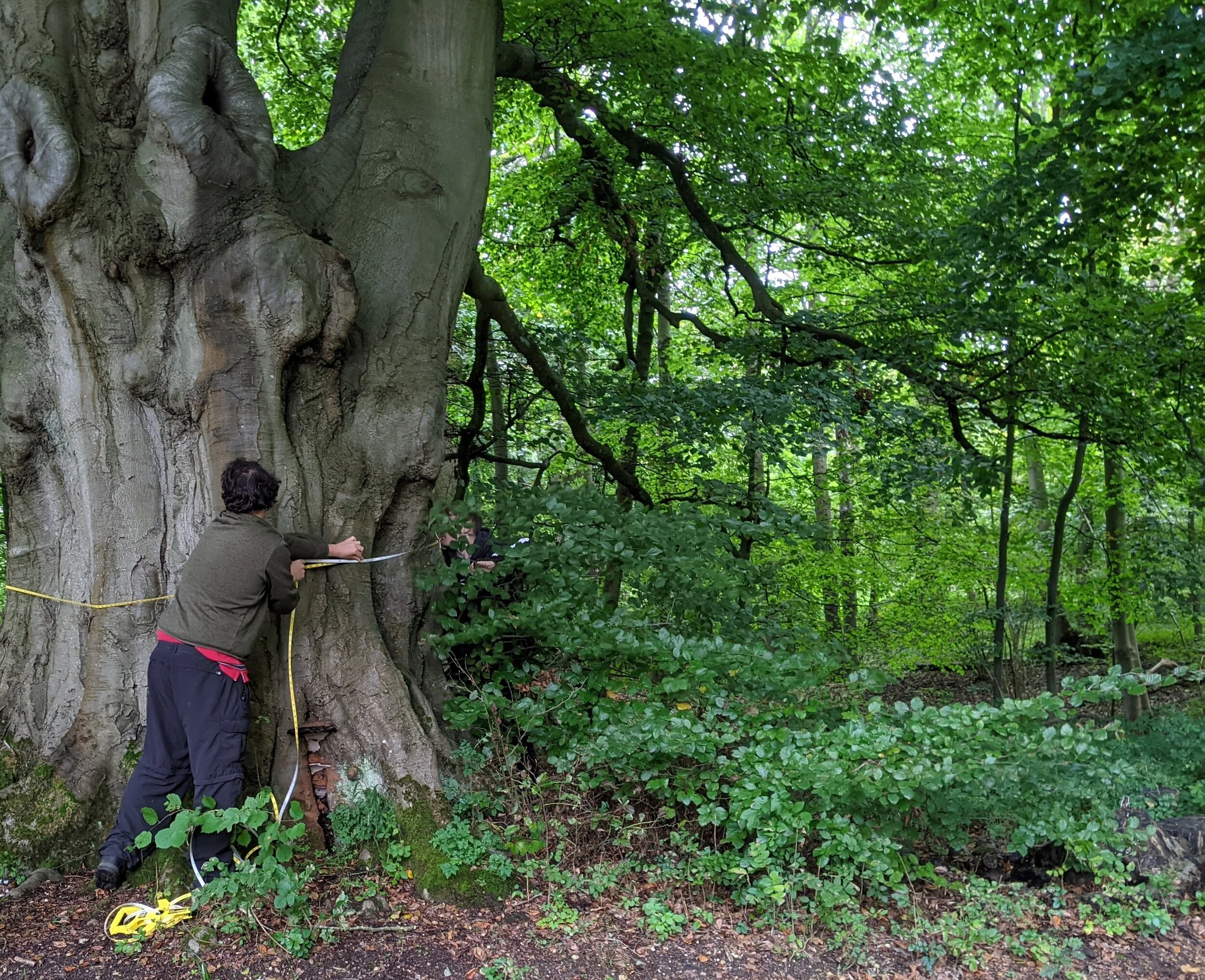
How much carbon is there in one of the massive beech trees at Wytham Woods? Mr Littlewood is finding out!

Cherwell School year 13s were one of several schools who measured Wytham’s trees this year. That’s on top of the 22,000 trees measured by the University researchers themselves in summer 2021. You can see the orange dots and the little ID tags on the trees that the researchers measured. And sometimes you can see researchers still splattered in orange paint. The metal tags jangle in the wind in a calming or spooky way, depending on your mood.

Here are Cherwell year 13 in December in the plantations, on the only snowy day we've had this winter. This day was to practice fieldwork techniques and plan their coursework projects. Those who chose carbon measurements for their project came back a week later to take all their measurements.

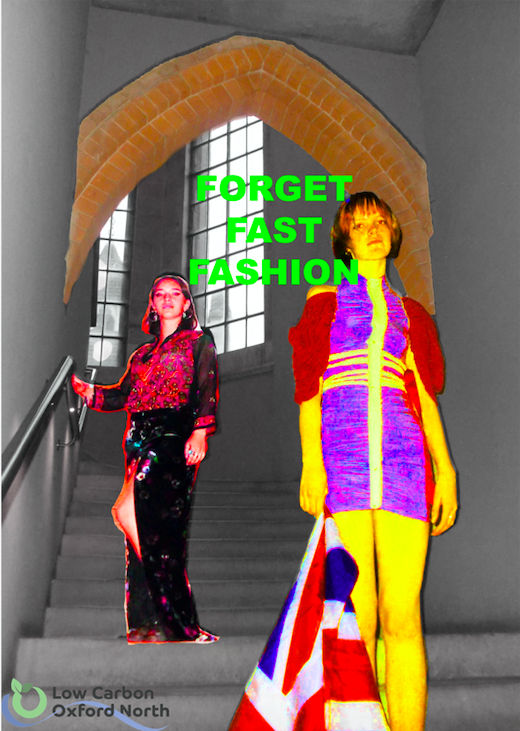
Forget Fast Fashion - a project to show how second hand clothes can become teenage fashion

It started with the Oxfam shop in Summertown, Oxford - 20 bags of second hand clothes, carefully selected for the teenage eye by the clever Oxfam team. On a cold Saturday morning, clearly requiring silly hats, clothes were collected and taken to St Clare’s College on the Banbury Road where a team of fashionistas from St Clare’s, Oxford High School, and The Cherwell School were waiting to turn second hand into high fashion.

A few days earlier the group of students from the three schools had met for the first time at Cherwell School, where they presented to each other the findings of their research on the problems of the fast fashion industry for the planet (water use, pollution, waste - it’s not pretty) and for people working in poor conditions in the supply chain. Galvanised by an appreciation of the extent of the problem, our teams were back together to show the world how to turn second hand into top teen fashion.

After several hours of sorting, selecting and creating with the help of fashion fan, Jeni Williams from Big Wheel Theatre in Education, our teams had their outfits ready to go.

In the wake of a passing climate march we made our way to the Oxford University Museum of Natural History, where we were met by Museum Educator, the wonderful Sarah Lloyd.

Then it was out into the Museum for some fashion shots amongst the dinosaurs.

Two days later we were back together, this time at Oxford High School, creating posters, with the expert help of the school’s technicians. And finally, the censored versions made it onto social media.

Huge thanks for this project go to Vicky Bullard from St Clare’s who picked up this project and ran with it with me; to St Clare’s College for a wonderful venue for our outfit selection and an all day breakfast for everyone; to Charlotte Richer from Cherwell School who does so much on enrichment for their students, on top of a full teaching schedule; to Oxford High School’s Helen Wilson, Head of Textiles, and her colleagues Yasemin and Joanna, the wonderful Art and Textile Technicians who taught the students to use Photoshop to make their posters; to Janet and her team at the Oxfam shop in Summertown and the Oxfam education and communications teams who were so helpful; to Rebecca Nestor and Julia Patrick from Low Carbon Oxford North who supported the entire project; to Sarah Lloyd at the Oxford University Museum of Natural History for being so flexible and kind; to Jeni Williams for bringing her creativity and calm; and of course to the wonderful, fun, creative, passionate and simply amazing young people who gave up their time and energy to this project.

Hopefully we can do a rerun next autumn with a new group of year 12s, and without Covid so that the students can all mix more easily and we can build on our experiences of this year.

Cherwell School wellbeing camping trip to Wytham

We dodged the rain! And it wasn’t too cold. In a repeat of a wellbeing event we ran in July for Cherwell School, last week we had 22 more students come for some relaxing time in the Woods.

The ten year 10s were brilliant - put up our new gazebo, cooked apple crumble, prepped dinner, lit the BBQ, carried firewood up the hill, built the campfire, and generally threw themselves into life in the Woods for 24 hours. We hope they benefitted from their experience.

Camp fire and marshmallows at the end of the day

Camp fire and marshmallows at the end of the day

They were followed by twelve year 12s who were sophisticated and interested in everything. They enthusiastically launched themselves into discussions, willing to walk and walk, and were polite and thoughtful.

Mr Littlewood taking carbon measurements with the year 12s.

Mr Littlewood taking carbon measurements with the year 12s.

Cleaning Bean Wood Cottage

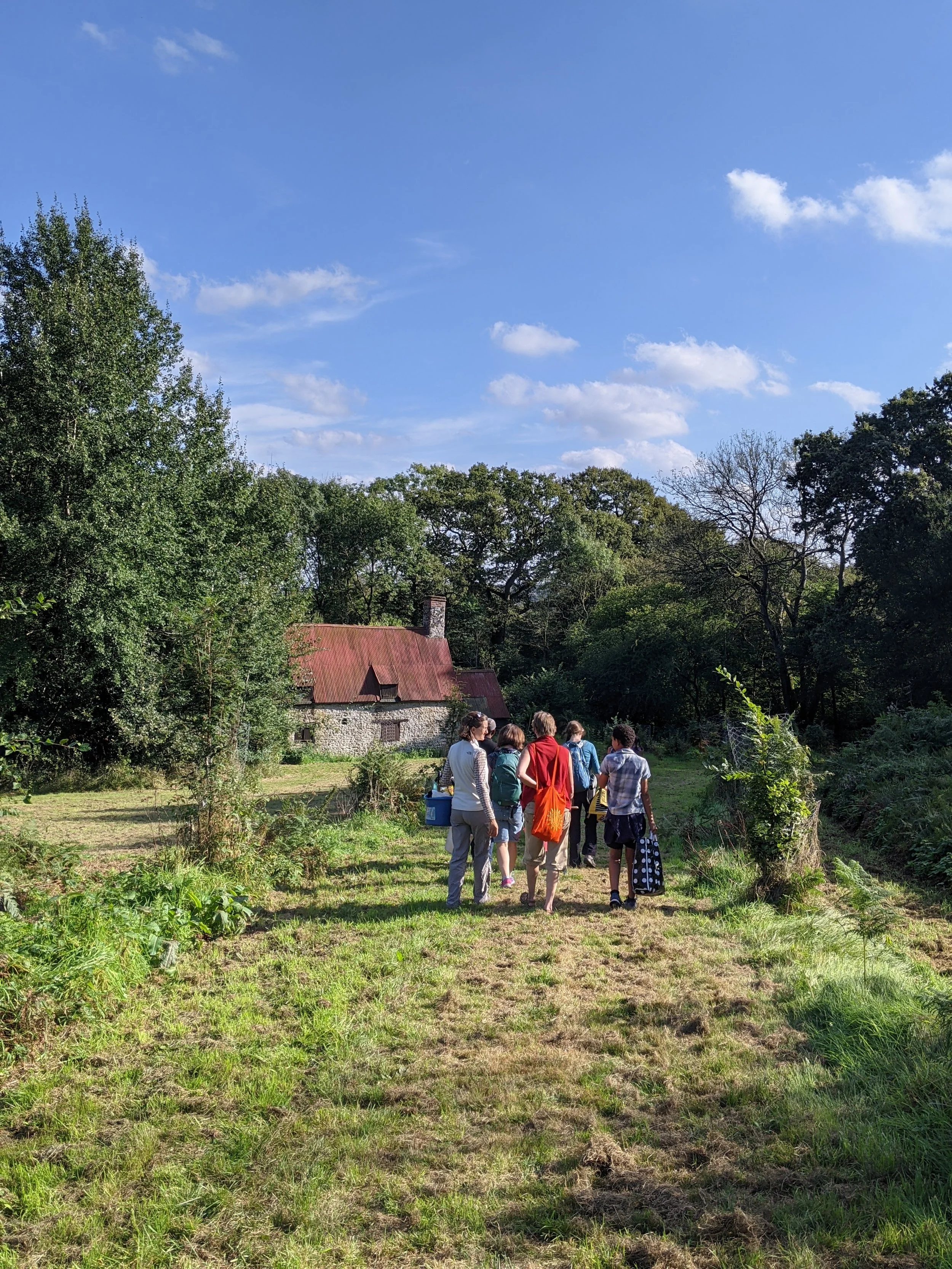
Bean Wood Cottage at Wytham Woods isn’t in great shape. In the past it has been used by the Guides. Today we want to clean it up and start using it again for activities for young people. So a group of enthusiastic volunteers carried buckets, water and cleaning equipment on a glorious autumn day in 2021 to make a start.

Next job is to get the builders in to sort the gutters out so that the walls can dry out. Watch this space.

Nature at the Ashmolean Museum

Kim Polgreen 23rd September 2021

Monday had to be the most fun I’ve ever had at the Ashmolean Museum in Oxford. I joined the Ashmolean’s Secondary Educator Clare Cory, woodland ecologist Dr Keith Kirby, and entomologist Dr Liam Crowley to look for nature in the art works and objects. We spent an hour and half on a voyage of nature discovery: in the Dutch still life gallery identifying insects, looking at the plants in John Inchbold’s English pastoral paintings, in the Pre-History gallery discussing how long it takes to cut down a large tree with a hand stone axe (several “long” days!), in the Silk Road exhibition where we discussed how wasps make paper from wood and silk worms prefer White Mulberry to Black Mulberry bushes, and passing through the stringed instruments discussing where the best wood for making violins comes from.

What is that flower / bug??

What is that flower / bug??

Clare and I are collaborating with Sarah Lloyd at the Natural History Museum to develop learning resources for the new GCSE in Natural History - a new qualification intended to connect young people with the natural world and understand human culture through the lens of the natural world. (It is hoped that the GCSE will be available for teaching from September 2023, and we hope to be supporting teacher training from 2022 and teaching the GCSE as an extracurricular subject from 2023.) The purpose of this visit was to seek insights related to nature, and connections with human culture.

My favourite insights from our discussions were -

  1. The insects in the Jan van Kessel paintings are remarkably accurate for their time, but the dragonflies are holding their wings in a position that they never do in life - showing that the artist painted them from dead specimens - totally logical if you have ever even tried to take a photo of a dragonfly!

  2. Since nature is used as decoration and often as symbolism in art, artists’ depictions of nature are generally not “accurate”. For example, artists might put species together that would never be together in the same place or at the same time of year (although Liam did tell us a wonderful story of having helped to date a painting by identifying insect species within it). This wonderful video from the Ashmolean discusses how a naturalistic painting by van Kessel actually contains fruits from different seasons, “stock” paintings were used in other paintings at a later date, and different insects carried cultural meanings.

  3. Some significant human cultural advances such as silk, paper (and the understanding of gravity) have been made by people who spent time outside and noticed what was happening in nature.

Our next steps are to turn these insights into some fun resources to help teachers, students and parents connect art, culture and nature.

Abingdon School Year 13 fieldwork skills development

On 21st September 2021 we hosted 44 Abingdon School students and their teachers at Wytham Woods for a day’s field work skills development. The day was designed and run by the teachers themselves and was totally brilliant. Our role was to show they what was available at Wytham Woods in a recce visit, and one of the ecologists we work with supported them on the day.

The students were kept very busy. One group did carbon measurements in the morning, and the other did soil infiltration measurements, and then they swapped at lunchtime.

PXL_20210921_134937743.jpg

The carbon measurements were done in the 1950s Thuja and broadleaved plantations at Wytham which are adjacent and easily accessible from one of the main paths through the Woods.

Their field work involved laying out 25m square plots, measuring every tree at chest height, measuring the height of every tree using an phone app, collecting and weighing 4 metre squares of leaf litter, and measuring percentage cover of shrubs for 4 separate square metres. They were then going to analyse their data back at school.

The infiltration measurements were largely about learning about how best to conduct experiments. The students were encouraged to try out their technique and refine it as they repeated it, thinking about how to minimise errors.

PXL_20210921_103423034.jpg


It was really interesting to see how smart phones were being used as tools. Students used an app to measure tree height, Siri to generate random numbers to pick random sampling plots, timers for the infiltration measurements, and the Seek app to recognise trees.

The students then had to think about what projects to choose for their NEA coursework. They were also going on a trip to Birmingham to consider human geography projects. We hope several of the come back to Wytham to collect data for projects.

To bring your students to Wytham for field work do get in touch. kim.polgreen@ligc.co.uk.

Climate and Nature Summer School at Wytham Woods

Learning about research taking place at Wytham Woods with the indomitable Curt Lamberth

Learning about research taking place at Wytham Woods with the indomitable Curt Lamberth

In late July, 2021, Twelve 15 - 17 year olds spent three busy days camping in Wytham Woods. They talked to Oxford scientists about our nature and climate challenges and the ideas that people have to address them, and learned about some of the challenges that the wildlife at Wytham is dealing with as the climate changes. In the evenings they went badger watching with one of the badger researchers, finding mats with one of the bat researchers, and came back to BBQ, campfires, marshmallows, and nights in our huge Berghaus Air 8 tents.

This annual summer school is normally held at the Environmental Change Institute at the University of Oxford, but because of Covid, Wytham was the safer option for 2021. It was so successful, that rather than moving back into the City in 2022 we will run this again at Wytham Woods.

Poetry workshop for teenagers with Poet in Residence Sarah Watkinson

On a beautiful autumn day in 2020, just before it started raining, Wytham Woods’ out-going Poet in Residence, Sarah Watkinson, and Youth Educator in Residence, Kim Polgreen, held a poetry workshop for teenagers in the Woods.

Sarah is a biologist and a wonderful poet and communicator. This event was just 90 minutes long, but the students wished it could have been longer. It was calming, energising and uplifting all at once.

One of the students commented that she had been in the woods many times before but had never engaged with it in that way before. To sit still and contemplate the thoughts that arise, and share those thoughts with others, was a wonderful way to be in a natural space and to reflect how one feels about that experience.

We wrote a few lines, Sarah read her poem about seeing a badger undergoing a routine check in with the scientists, and we talked about our favourite poems. Wytham Woods has a new Writer in Residence and we look forward to more writing events over the coming year.

School field work at Wytham Woods

In August and September 2020 we held information sessions for local teachers to discuss how they could use the Woods for field work and other activities to support the school curriculum and student wellbeing. As a result, over the autumn term, three schools have brought groups to undertake A-Level Geography Non Examined Assessment field work.

They were all measuring trees, for projects on the carbon cycle and carbon sequestration. It is great to see how students are practically engaged with carbon and climate issues. Other schools are booked into to do some biology field work and one group is going to do a 5K run round the woods!

Insect science and art at Wytham Woods

In early October 2020, before it got too cold for bugs we dragged bug expert Tom Atkins away from his research work in the Woods, and joined forces with the OU Natural History Museum and The Ashmolean to put on a fabulous event on insects. A group of teenagers joined us to hunt for bugs in the leaf litter and in dead wood in the Woods. Treasures were a MASSIVE hornet which made one of our collecting bugs vibrate she was so cross with being captured – we put her back where she wanted to be as she was heading for hibernation - , an ichneumon wasp, and a devil’s coach horse beetle. And Tom brought two very cute and active Minotaur beetles that he had borrowed from Shotover for a couple of days. Sarah Lloyd from NHM brought some beautiful moths from their collection and gave a fabulous talk on the breadth of the insects and how they are related in families. Clare Cory from the Ashmolean brought slides of some of the beautiful pieces of art in the museum which depict insects, including some which were used by artists to show their skills so that they would be recruited to add the insects onto other works! Then we sat quietly, warmed by the camp fire, and drew.

Making videos in the Woods

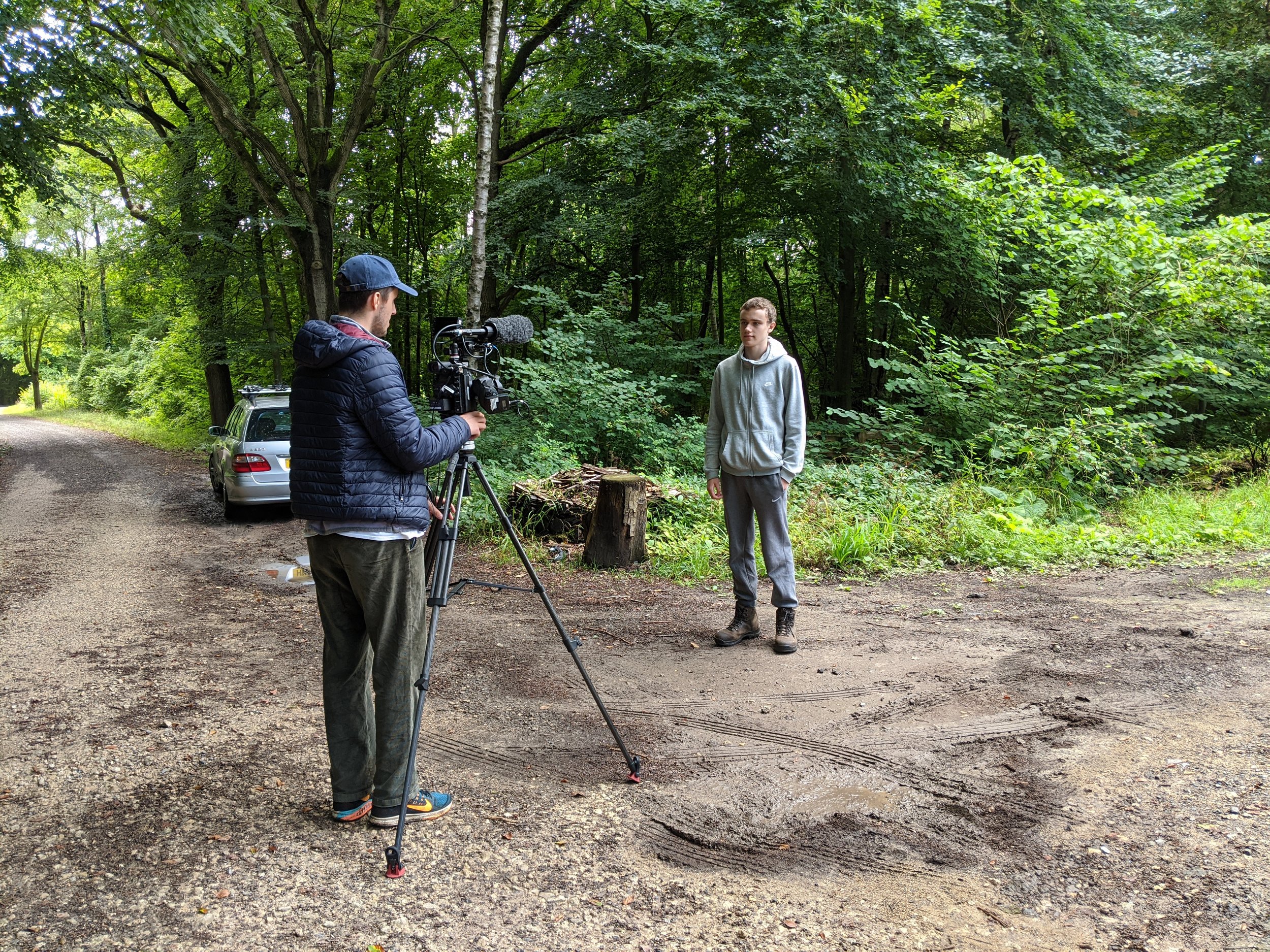
In August 2020 a group of teenagers made videos about the scientific research and the art projects taking place in Wytham Woods. In small groups, they spent an hour with one of the researchers and learned about what they do and what they have discovered.

The students then worked with Angel Sharp Media to create short videos about what they had learned, to be shared on social media. They had complete freedom about how they presented the information they collected, and the resulting videos are a wonderful interpretation of what they took away from their interaction with the researchers and the woods that day.

We hope that they will inspire other students to come and explore for themselves.

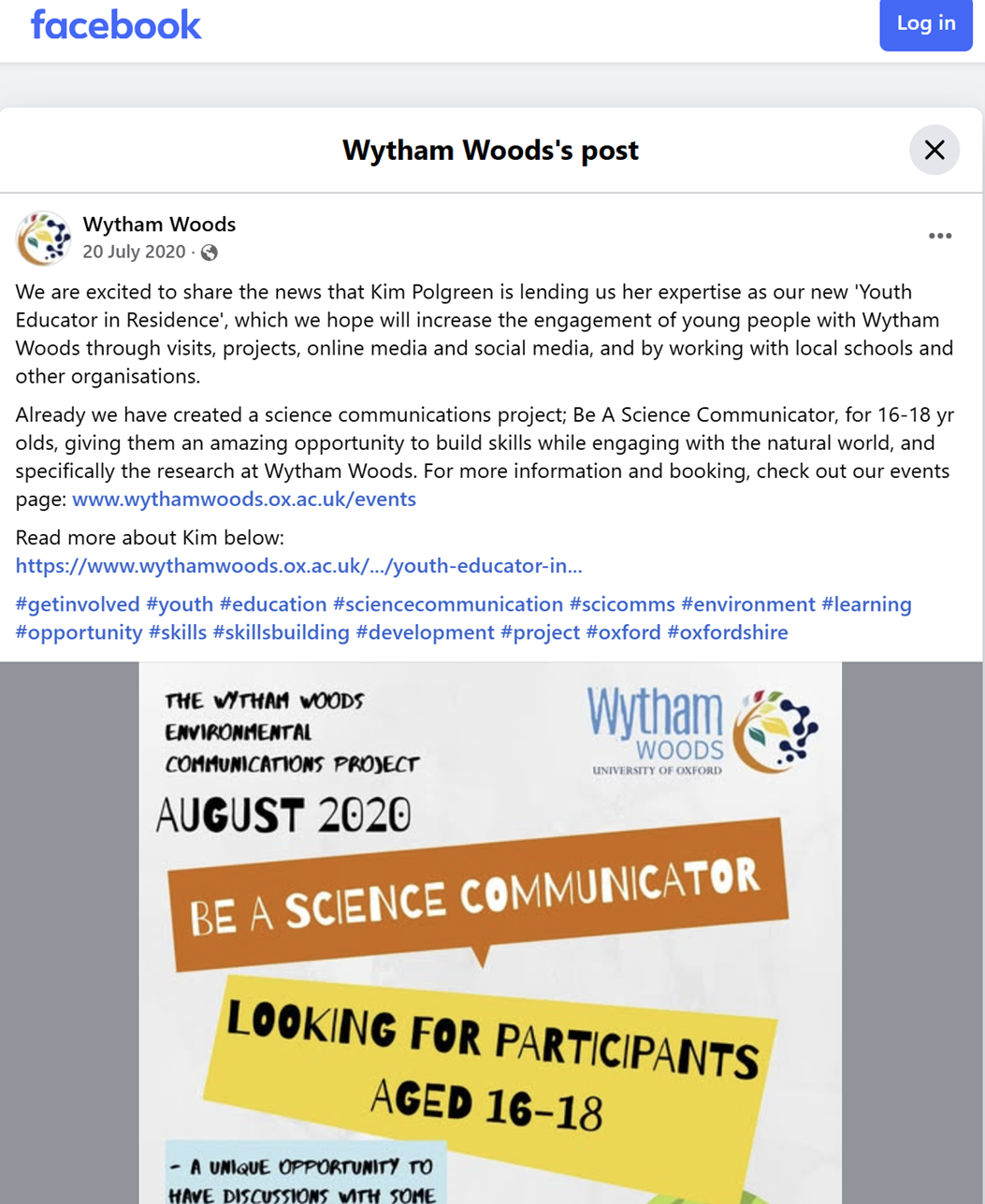
Appointed as Youth Educator in Residence at Wytham Woods

I’m so honoured to have been made the Youth Educator in Residence at Wytham Woods. Many thanks to the Conservator, Nigel Fisher, and the wonderfully supportive team in the Estates Department of the University, for the opportunity.

The Woods were gifted to the University of Oxford by the ffennell family in around 1944 when their only daughter, Hazel, died in her early 30’s. The ffennells trusted the University to preserve the beauty of the Woods, and to use it for research, for education, and for enjoyment by the local community. The Woods in part have fulfilled their responsibility for education through their support of the Hill End Outdoor Education Centre. Whereas Hill End focus on primary age children, this new role will allow us to develop a “nature education” offering for teenagers in the main area of the Woods. I am excited to start exploring the opportunities.