A few times a year I take small groups of teenagers (6 at a time) for work experience weeks. The objective is for them to learn about what people do in the world of work to address sustainability issues. The hope is that they learn a bit more about nature and climate than they will get from the curriculum, and that the anxiety that so many young people feel about these issues will be ameliorated by learning that action is being taken, and that they could find a future career in which they can contribute to finding and implementing solutions.
I like to get them out into nature and allow them to move, so we spend time wandering in the woods, meadows, parks and farms around Oxford, as well as at the amazing Oxford University Museum of Natural History, meeting people who work in these places. These environments allow us to discuss a wide range of topics and career opportunities: food and agriculture, the circular economy, ecosystem services, regenerative agriculture, river management, waste management, infrastructure, and so much more.
This has to be the best sort of teaching. A slow pace, picking up on what we see along the way, with time to think and explore ideas, no worries about getting things wrong, checking facts as we go, problem solving and being creative. Having just six students I can get to know them a little, listen to all of them, encourage individuals in their own ideas, and encourage curiosity and kindness.
The opportunity to do things differently is fantastic. I remember one student who wanted to draw all the time, head down, hidden behind her hair. While she drew, she listened and contributed to the conversation, did a fantastic presentation, supported the others, was helpful and kind, and learned so much. All while creating the most impressive piece of art to adorn our final project by the end of the week.
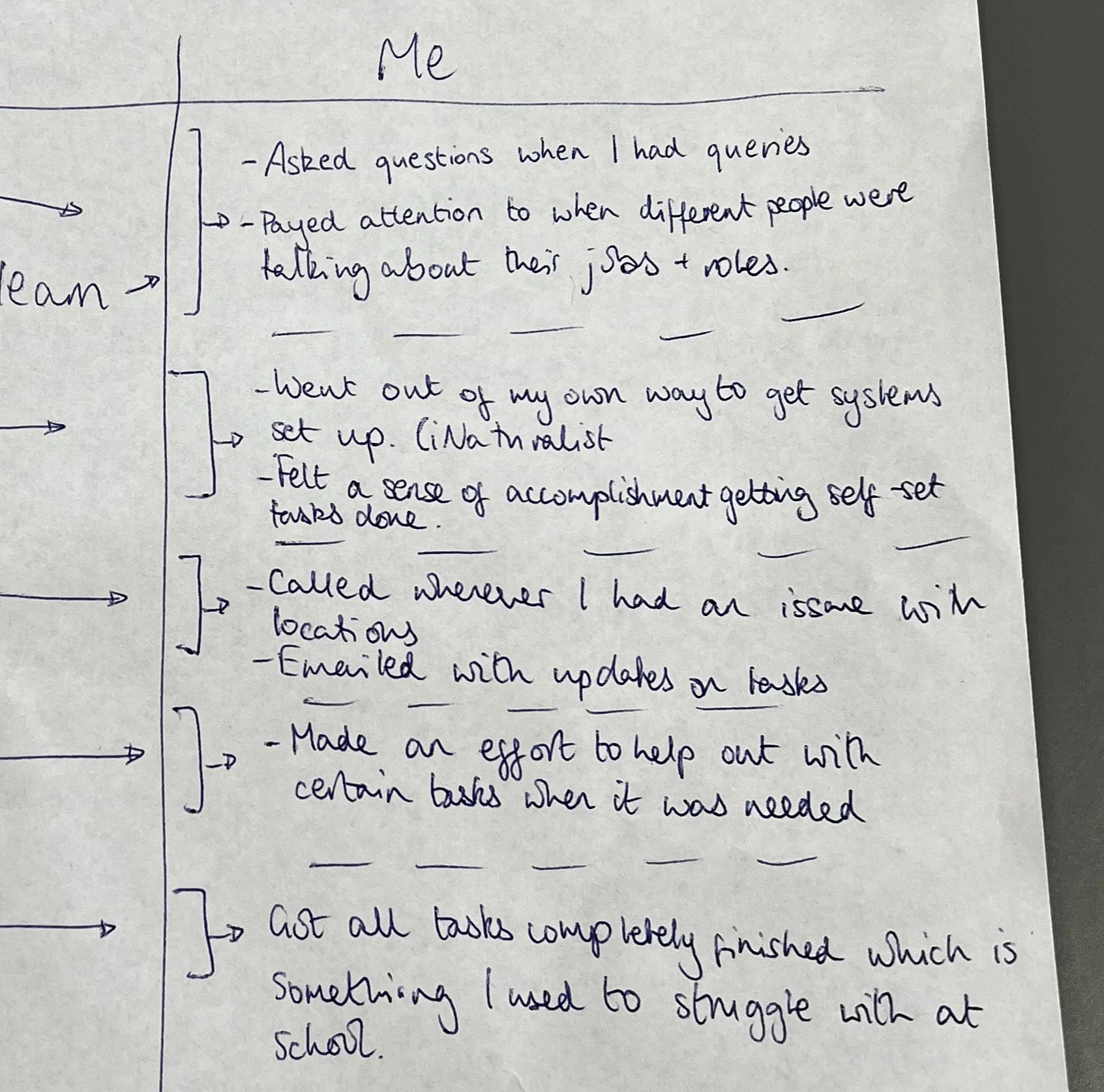
One of most rewarding aspects of these weeks is that we talk about the kinds of skills and attributes that are needed in the workplace. I have my own list of skills including communication, teamwork, kindness etc, but I let them come up with their own and we always end up with a good list. At the end of the week I ask them to assess themselves against each skill or attribute. I use this for the feedback I am asked to give on them (I object to being asked for this, but that’s another story). I am always so moved by what they write. They are disarmingly honest, and often sadly tough on themselves. I get the impression of lovely young people who are doing their very best to navigate the world they find themselves in.
Dr Kim Polgreen