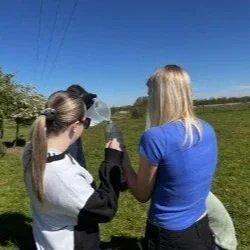
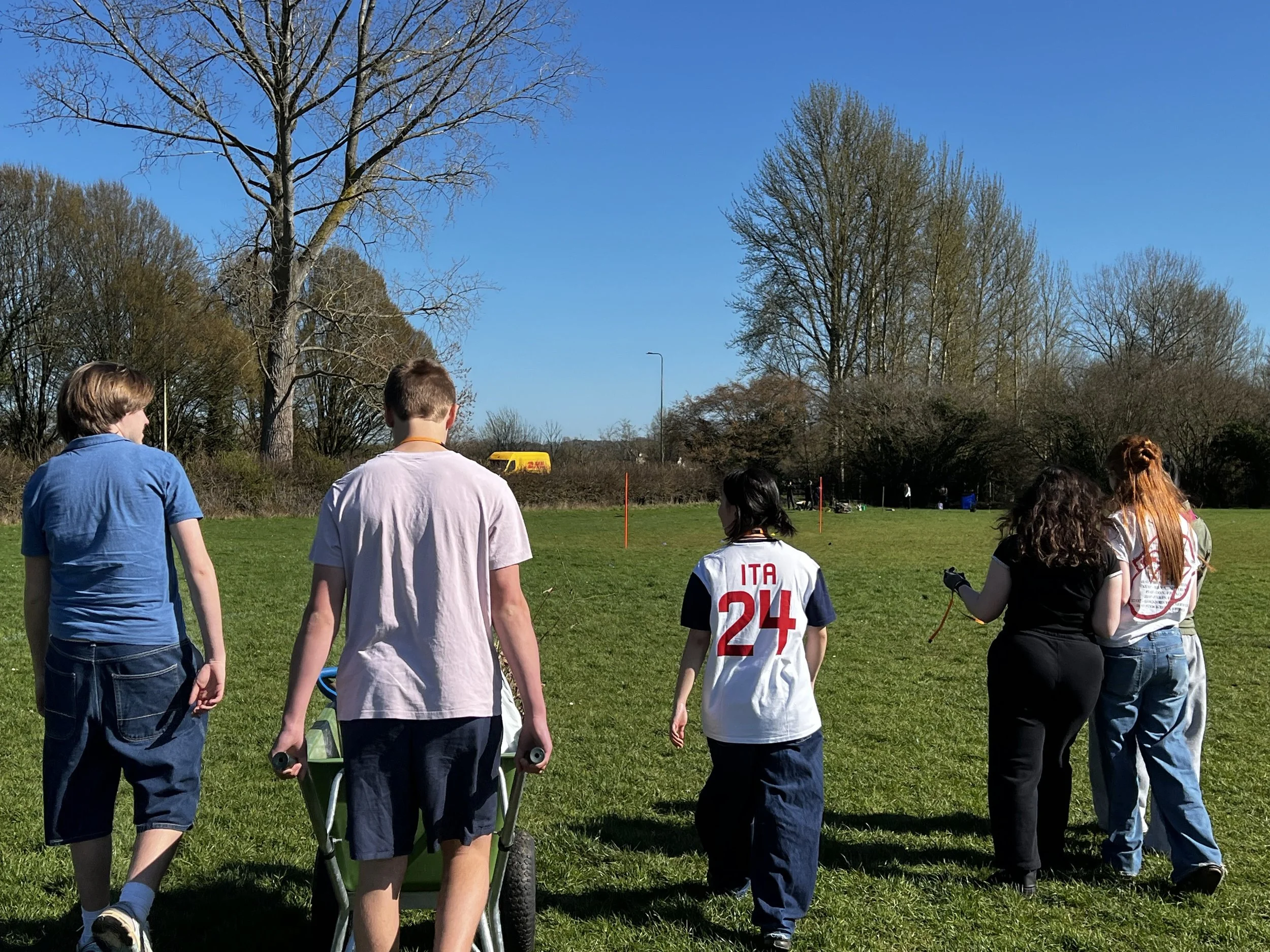
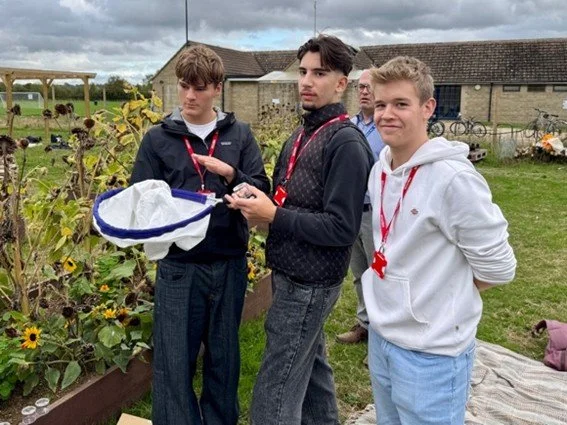
This morning I did one of the monthly Oxford Earth Academy "training" walks for Duke of Edinburgh students enrolled in the Oxfordshire Doorstep Nature Project. Students enrol as volunteers and use the Seek and iNaturalist apps to add wildlife observations to our iNaturalist project. They are asked to focus on their school catchment, and particularly in urban areas.
This data is contributing to the Oxford Nature Park, a citizen science project engaging local people to map the lacework of green and blue spaces across our city, regardless of who they belong to - a butterfly eye view - because nature doesn't care and needs every tiny space.
The purpose of the Doorstep project is to engage the eyes of young people who are the citizens most often out and about, to enthuse them about the natural world, give them a sense of purpose in contributing observations and agency in doing something to address the loss of biodiversity, and to give them a sense of interest and pride in their local spaces.
The monthly walks are so that we can meet the students, check they know what to do, and introduce them to the nature rich spaces in and around Oxford. The students are accompanied by family members, which is a wonderful opportunity to meet interesting people who are supporting their kids to enjoy nature, and often enthusiastic younger siblings.
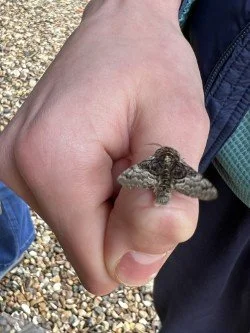
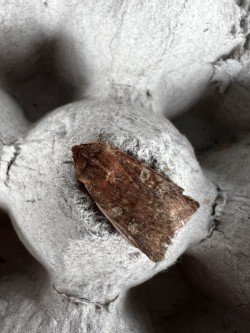
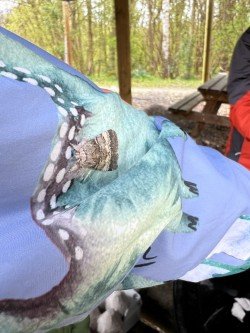
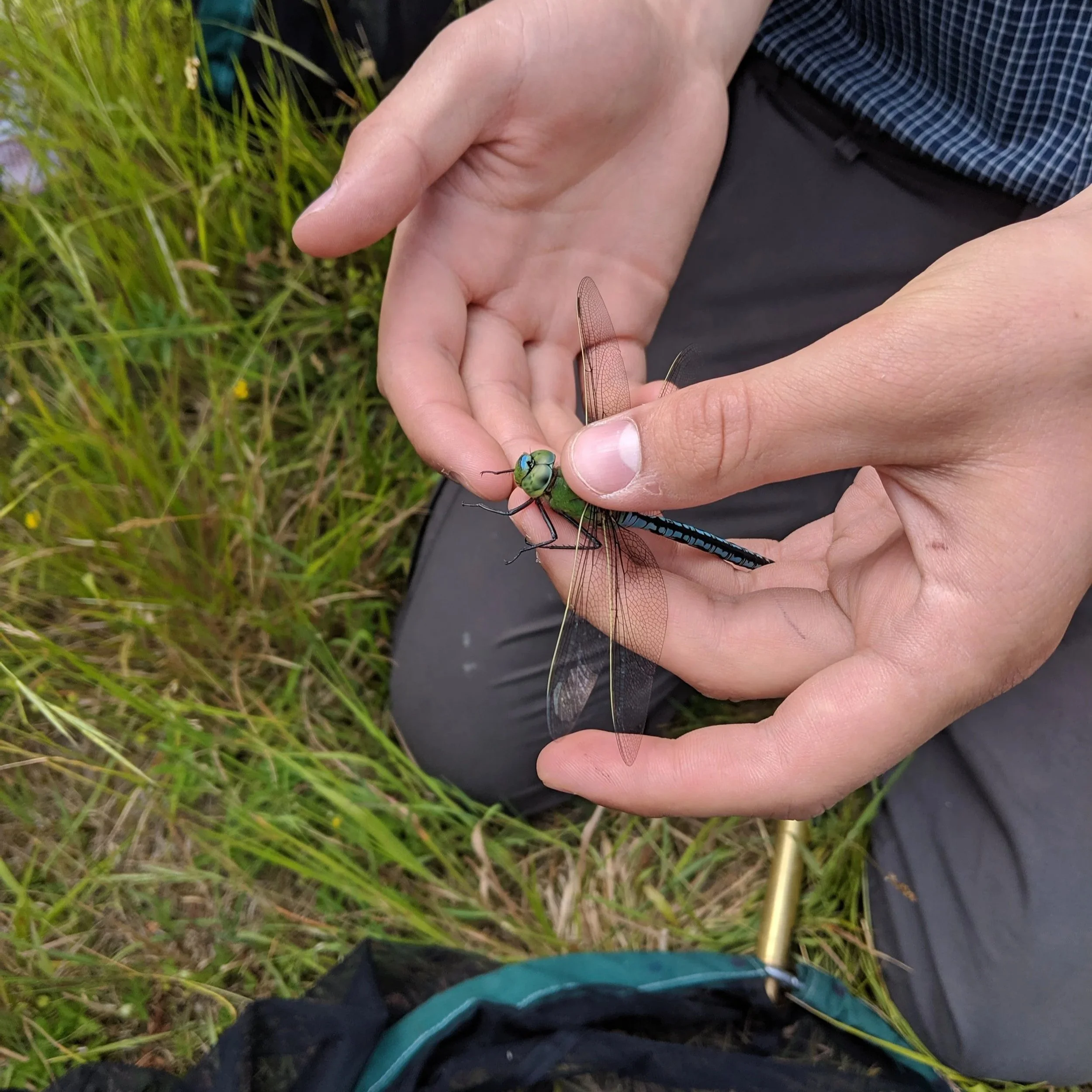
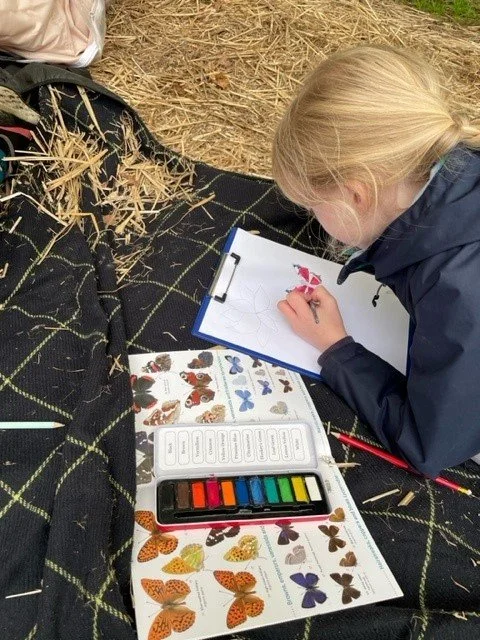
This month we were at Wytham Woods, checking out a moth trap I set last evening. We ID'd the moths, admired their gorgeous patterns and cute furry faces, and then explored more the Woods on a perfect spring day.
Business students take a walk in the Parks
"The tour at the University Parks was a unique experience. Dr. Polgreen shared her expertise which enabled me to realize a different perspective on how to approach "sustainability"." 😁😁😁.
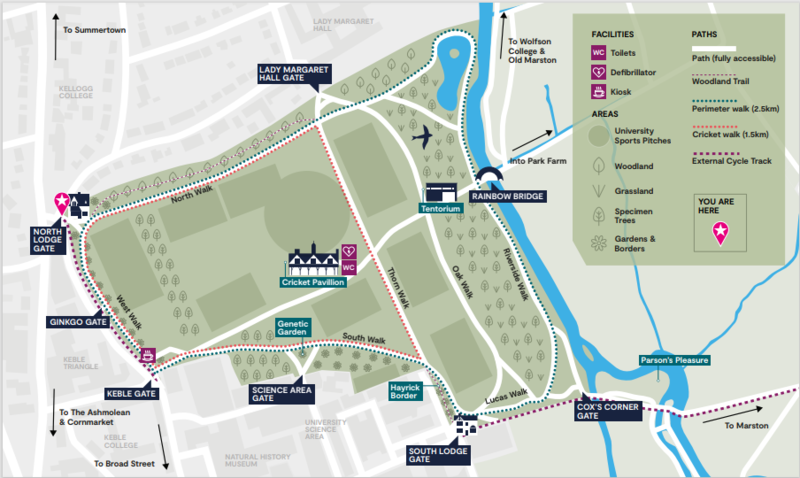
I've been taking MBA students, and Economics and Business Management undergraduates, for walks in the Park. One hour walks in Oxford's University Parks to be precise, with a peek across the River Cherwell to the beautiful river meadows beyond. It feels quite "out there" to take very busy, highly focused, business-minded students outside into nature, and talk about soil and plants and bugs. But it seems to work really well. Based on my observations and their feedback, I’ve tried to capture why.
The walk is a series of planned stops and connected conversations on linked topics as we progress through the Park. My aim is to weave a story for them through the landscape, as I learned to do teaching at Wytham Woods.
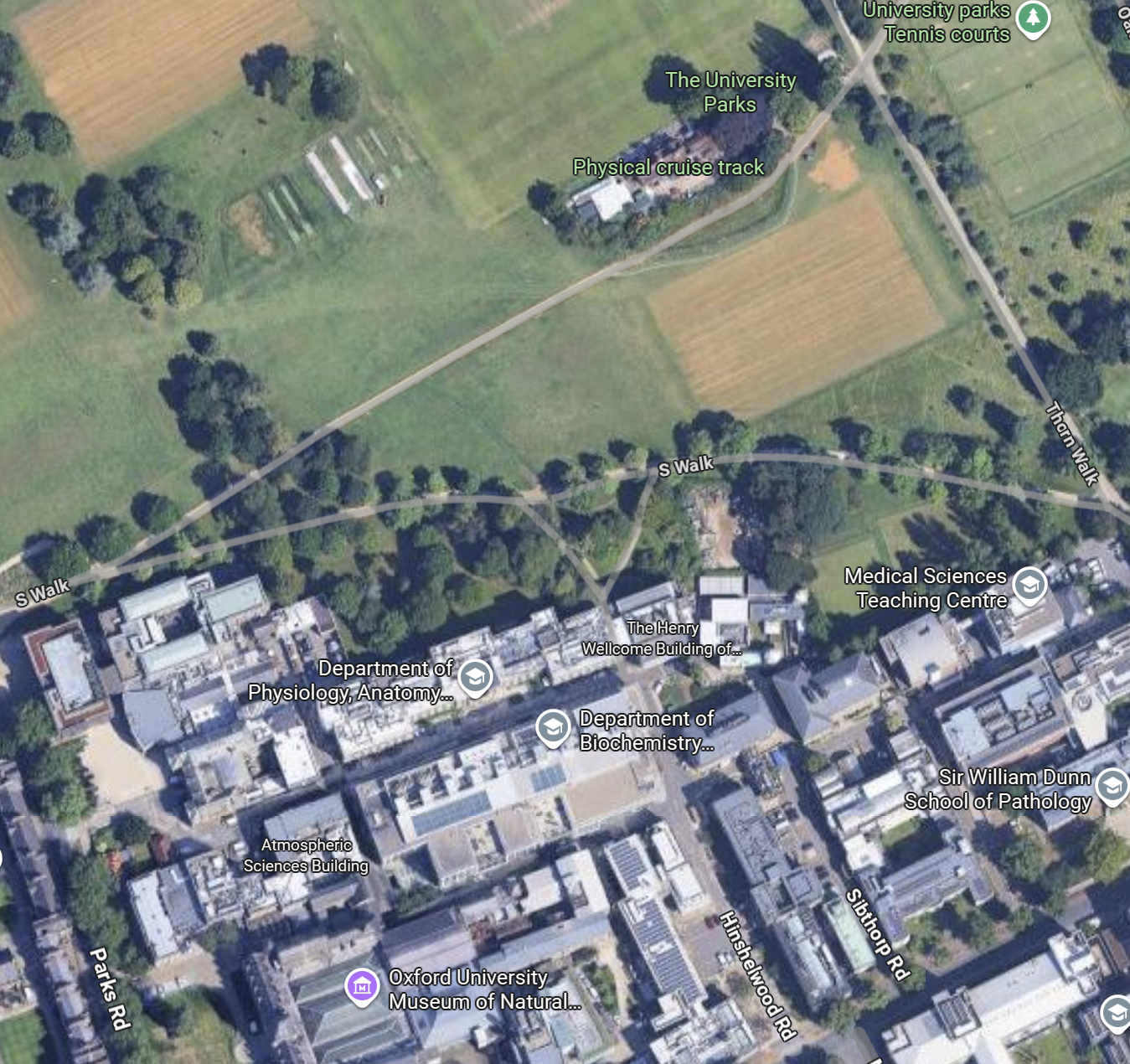
We set off from the University Museum of Natural History where the students spend the other hour of their half-day session. We stop first by the busy road and I invite them to use their senses to take in what they are experiencing. We discuss the noise, the busy-ness, the particulates that they are inhaling, and the sense of stress that these factors give us all, and talk about these in terms of externalities from the businesses and organisations that employ the people driving past on their way to work. I rescue them from this assault on their physiology, and take them into the peace of the Parks. I carry with me a copy of Prof Kathy Willis's book, Good Nature, in which she summarises the current research findings on how nature is good for our minds and bodies. I give them an insight into the impact of being in nature could be having on them right there, and invite them to compare how they feel now with their feelings by the road. We use this to discuss how we could put a financial value on the land, and how we can put a value on nature overall.
We head towards the river and stop in a wooded area where the Parks Dept allow nature to flourish more naturally than in the more manicured areas. To encourage them to notice the variety of species around them, we do the Leaf Shape Challenge – an activity to do with everyone I teach, from 5 years old upwards. The idea is for each person to find as many different leaf shapes as possible on the ground around them within a few minutes, and pick one of each. That gets them to notice the huge variety in a small space. And then I ask them to pool their leaves, and based on the shapes, work out how many different species they have between them. This gets them noticing differences and similarities. This leads into a conversation about why there is such variety, even within such a small area. We discuss the interdependence between plants and bugs, and discuss the value of the eco-system services provided to humans.
We then focus in on bugs, and dig up a sod of earth which usually causes great excitement, particularly if we find worms. It’s surprising that future captains of industry are enthralled by meeting one of the most important species on earth. We pass round the earth and I encourage them to sniff it. We talk about the micro organisms and how they break down all of natures “wastes”, the parallels with our gut flora and the robust health of gardeners. This leads to a comparison with the human economy which produces wastes that nature cannot break down fast enough or at all, leading to our waste and pollution problem, including carbon pollution. A rich discussion of the industries they work in, or are studying, follows.
Having replaced soil and worms we pick our way through the woodland to the river. There the conversation may be around flooding and the value of the flood plain in protecting homes and businesses, the value of rivers for amenity, the sewage and waste dumping scandals in the UK and where the money went, the holes in the bank caused by the American crayfish and the wider issue of introduced species and diseases due to human moving species global. We may talk about winners and losers of business activities, and intra-human and inter-species justice.
Looking across the river to Park Farm, we may discuss nature friendly farming and protecting species, the risks to humans of messing with nature, the opportunities for working with nature. By this time I’ve normally lost control of the narrative and everyone is contributing.
My concluding remark is that businesses are embedded in the natural world and every decision they will make in their future careers has ramifications for other people and other species now and for a long time to come, and a suggestion to examine what they enjoy, and what is important to them and to take that into their future work. I leave them to walk slowly back to the Museum chatting to each other.
Teaching in this way is clearly more effective than giving the same learning points in a presentation in a classroom. But there is also something about being in the Park that is impactful. I've tried to capture what I see in their reactions to the experience and what they say, and I think there are several ingredients that make this experience valuable.
1. A natural environment and a different mode of learning seem to be refreshing.
2. The conversational style and the pauses as we walk give them to reflect and contribute thoughtfully.
3. The physicality of the experience, in contrast to a largely conceptual learning experience they are used to, appears to be valuable. Using their senses, touching trees, and leaves and soil, moving, digging, and collaborating on sorting leaves, might just be firing up different regions of their brains.
4. The opportunity to connect with each other in a space which allowed for deeper conversations about purpose and meaning, appeared meaningful.
These walks are part of the Climate Leadership programme for the Economics and Management course at Oxford University, and the MBA programme at the Saïd Business School, University of Oxford. Both opportunities have been brilliantly conceived and created by Dr Bettina Wittneben, with Laurence Cranmer.
Blog on nature education research for exam board OCR
The exam board, OCR, who is driving the new GCSE in Natural History, invited me, Kim Polgreen, and Joe Boyle from Oxford University., to write a blog on our recent research on nature education in secondary schools. You can find it here.
Seven Principles for Engaging Schools with Nature: new publication
We have had a wonderful time collaborating with local teachers and nature educators to write a paper capturing ideas for engaging schools, secondary schools in particular, with nature. You can find the paper on the link below.
Schools using nature for education and wellbeing - 4 case studies
Our work on school case studies - looking at 4 schools that are using nature for education and wellbeing - are finally published!
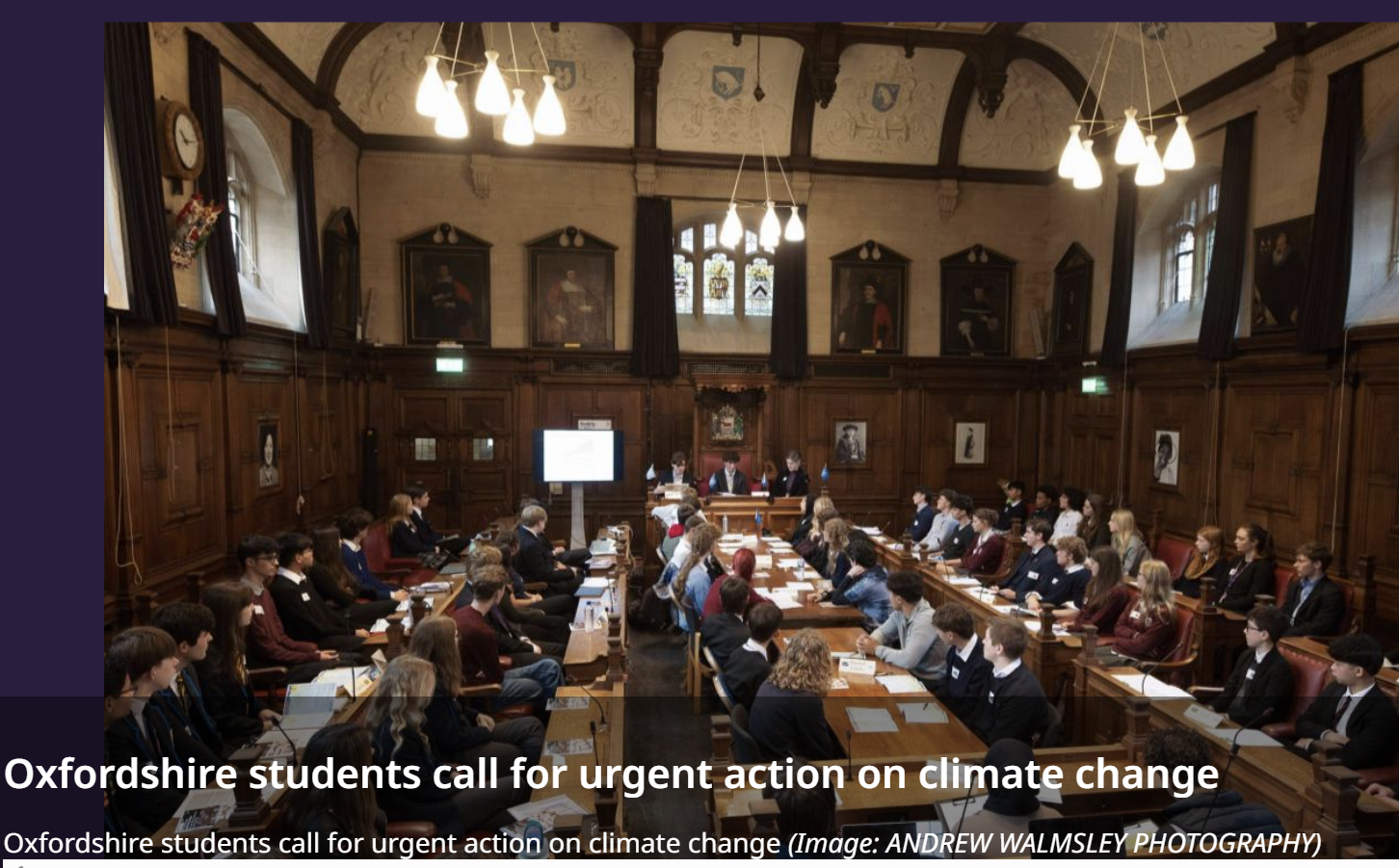
OxCOP run by Magdalen College School with OxSSN in the Oxford Mail!
The brilliant Lydia Wainwright at MCS organised a second OxCOP for local schools. The Oxford Mail reporter attended and wrote a fantastic piece so we are going to use that in place of a blog from us.
“Around 100 students took part, acting as delegates for different countries and negotiating climate policy on global themes such as energy, ecosystems, agriculture, oceans, industry, and reparations.
The simulation included intense negotiations and the challenge of balancing climate goals with immediate societal needs.”
“Schools involved included Abingdon School, Cheney School, Fitzharrys School, John Mason School, Kingsdown School, Larkmead School, MCS Brackley, Oxford High School, and Oxford Spires Academy.
Radley College, St Clare’s Oxford, St Edward’s School, St Helen and St Katharine, The Marlborough School Woodstock, The Oxford Academy, The Swan School, and Wheatley Park School, were also part of the proceedings.”
See the full article in the Oxford Mail.:
Students across Oxfordshire call for urgent climate action | Oxford Mail
Runner up in the 2025 BBOWT Volunteer Awards!
What a lovely email to receive this October! Many thanks to Steve Cappleman from Cherwell School, and The Bucks, Berks and Oxon Wildlife Trust for this honour! BBOWT are fantastic and we are hoping to work with them on Green Skills as part of their amazing Reconnecting Bernwood, Otmoor and Ray RBOR project.
Dear Kim
I’m delighted to let you know that you were nominated for the 2025 BBOWT Volunteer Awards by Stephen Cappleman. Your nomination was reviewed by an independent awards panel, and you have been named a runner up - a fantastic recognition of your dedication and impact.
The panel shared how inspired they were by the stories and contributions of all nominees. While you were not selected as a winner this time, being named a runner-up is a significant achievement and a clear reflection of how deeply valued your contribution is.
On behalf of myself and the entire BBOWT team, thank you for everything you do. We are incredibly grateful for your commitment and proud to celebrate the difference you make.
With best wishes,
Estelle
Estelle Bailey MBE
Chief Executive
Berks, Bucks & Oxon Wildlife Trust
Sustainability School Exchange programme
Kim was very proud to support a school partnership between an Oxford school and a school in Brühl, Germany, by designing and running a range of activities linked to biodiversity. This is the report written by the teachers from Brühl.
Cherwell School – Gesamtschule der Stadt Brühl School Partnership
From 17 to 21 September 2025, students from Gesamtschule Brühl (Germany) visited The Cherwell School in Oxford (UK) as part of a school exchange programme financially supported by UK-German Connection. In the UK phase of the partnership, the central theme was: “Experiencing, Protecting and Promoting Biodiversity"
Under the guidance of sustainability educator, Dr Kim Polgreen, the German students took part in a variety of hands-on environmental activities together with their British peers. In joint UK-German teams they identified local animal and plant species on the school's own ecology garden and at the newly created pond. Students learned about the habitat, behaviours and ecological benefit of the observed species.
In a symbolic act of friendship and sustainability, they planted a school friendship tree (an apple tree), conkers and a hedgerow, strengthening both ecological awareness and the bond between the two schools. Moreover, the gift of an insect hotel from Gesamtschule Brühl to Cherwell School, demonstrated the students’ commitment to biodiversity and cross-cultural exchange.
In addition, the students contributed to the “Oxford Nature Park” initiative by mapping trees, ivy-covered buildings and walls, wild areas, and cultural references to nature in the local area. This allowed them to connect biodiversity with local identity and urban ecology. While roaming through Oxford in their joint teams, students also enjoyed social time together.
The goals of the project were closely aligned with the UN Sustainable Development Goals (SDGs) 11–15, which focus on sustainable cities, climate action, and biodiversity on land and in water. The exchange also promoted international understanding and intercultural learning, as students engaged in meaningful dialogue and built new friendships across borders.
Both schools are members of the European Parliament Ambassador School (EPAS) programme and participation, involvement and politics was a common interest for students from both countries. The theme of biodiversity resonated powerfully, with animated discussion of the relative success of the UK and Germany in protecting and promoting biodiversity in their own countries.
The staff and students of Gesamtschule Brühl are already looking forward to welcoming the British students for the return visit in spring 2026, where the collaboration will continue and deepen.
This project would not have been possible without the generous support of UK-German Connection, whose funding made the exchange accessible and impactful for all involved.
Reflections of UK students from Cherwell School:
On mapping: "I noticed things I wouldn't have been able to notice otherwise, so I learned more about the area around me." (Mia)
On showing Oxford to new people through mapping: "It was an eye-opening experience as it made me see the area that I am very familiar with in a new light as we were looking, sharing and documenting things that I normally pay no attention to." (Alexandra)
On project approach: "This shared experience discussing and being in nature helped to bridge the cultural gap as we realised we had much in common." (Marlene)
On the exchange: "I loved being proud of my school and my peers and being able to show the German students what we have created [in the ecology garden]." (Charlotte)
On activities: "Catching insects and moths was really fun - and even became competitive!" (Maya)
On bugs: "I'm not a big fan of insects but it was actually very interesting, which was nice." (Marnie)
On conversation topics: "We discussed everything from the recent political climate to school differences and even differences in time given for road repairs!" (Marnie)
Reflections of German students from Gesamtschule Brühl:
Translations:
“I really loved exploring the ecology garden and the pond. It was fascinating to discover how many species live right on the school grounds! I learned how to identify different plants and insects, and it made me think more about how important biodiversity is in urban areas. The best part was working with the British students – we had so much fun and even exchanged contact details to stay in touch.” (Sarah)
“I enjoyed taking part in the Oxford Nature Park mapping project. It was exciting to walk through the city and look at nature with different eyes. I had never thought of ivy-covered houses or wild corners as something important – now I do! Working in mixed teams with the English students helped me improve my English and made me feel more confident.” (Gabriel)
“I like the idea that the insect hotel we brought from Germany will be put up at Cherwell School. I learned that such small things can make a big difference for biodiversity. The exchange gave me a new perspective, and I really enjoyed getting to know the British students. We still chat online!” (Ole)
“One of my favourite moments was when we planted the apple tree together. It was teamwork, and we laughed a lot! It felt good to do something lasting for the school environment. I also liked talking to the English students about how nature is treated in both countries. We found a lot of similarities and some surprising differences too!” (Amelie)
“At first, I was a bit nervous about speaking English all the time, but the British students were really open and kind. We worked together to identify species around the pond – I had never done that before! It was both fun and educational. I definitely want to take part in the return visit next year.” (Sophia)
Teacher Reflections
German teacher, Claudia Reschke, said:
Translation:
“This exchange has been an unforgettable experience – not just for our students, but for us teachers as well. Watching young people from two different countries work together, explore nature, and engage in meaningful conversations about sustainability and biodiversity was truly inspiring. The collaboration with The Cherwell School was incredibly warm and open, and the students formed real friendships that go far beyond the project itself. We’re already excited for the return visit in spring and can’t wait to continue this wonderful partnership!”
UK teacher, Charlotte Richer, said:
“It's clear from reading the comments and hearing some of the stories just how much the students took from the experience. It means so much to them and to the school to be able to continue to grow our partnership - both literally and metaphorically, in this case - and to see so many new friendships flourish. It's clear that it's formed memories and shaped new attitudes that the students will keep for a long time to come.“
Geographers at the sustainability chalk face - strategies for teaching in a changed world
As part of our work with the Oxford Education Deanery, Kim ran a webinar for geography teachers to discuss their approach to climate teaching, in particular how they keep up to date, and how they manage the emotional impacts. The webinar transcript and chat were reviewed and written up as a blog by one of our summer interns.
Written by Durham University Geography BSc Student, Maria Allison, Summer 2025
On the 12th January 2025, educators and researchers gathered to discuss the role of education, and especially geography, in addressing the climate emergency. Drawing on insights provided by Professor Myles Allen in his recent lecture at the University of Oxford, the discussion emphasised the urgent need for a combination of behavioural change, education reform and interdisciplinary approaches in order to equip young people for an unpredictable future.
As a Geography BSc student studying at Durham University, I was keenly interested in the range of views expressed and the discussion of possible practical solutions to this challenge. This links directly to my own research interests on the impacts of the rapidly changing climate on societies. I now proceed to summarise the key points of this webinar.
Professor Allen argued that while net zero by 2050 is still possible, progress will depend on the acceleration of human behavioural change. We need to prepare students not just to understand the science, but to make informed decisions and thrive in a rapidly changing world.
The webinar revolved around three critical questions:
What is being taught and does it meet the brief for our future citizens?
Content is changing in real time – how can educators stay up to date?
The content has emotional impact – how can we balance learning with mental health?
A panel of experts, including Steve Brace (Chief Executive, Geographical Association), Jane Blane (Geography teacher and DPhil student, University of Oxford), Paul Turner (Education Lead, Ministry of Eco Education), Dr Aoife Bennett (Research Lecturer, Oxford University), Dr David Mitchell (Associate Professor, UCL Institute of Education), Dr Bill Finnegan (Sustainability Curriculum Project Lead, University of Oxford), and Shelley Monk (Geography Subject Advisor, OCR), discussed these challenges. Throughout the conversation, they addressed the importance of geography as an interdisciplinary subject, as well as a powerful tool for climate literacy.
The consensus was clear: education is not just a component of the UK’s net zero strategy; it is our most fundamental tool for empowering the next generation with the knowledge, skills and agency to face the climate crisis.
A. What is being taught and does it meet the brief?
The first discussion addressed whether students are learning what they need to become informed citizens in the climate crisis. The key questions raised included: What is happening? What are the implications? What are the solutions? And what is my role?
Jane Blane noted that climate change teaching often feels disjointed and constrained by curriculum pressures. While Key Stage 3 offers more room for creativity, older students often lose opportunities for developing agency and soft skills as exam-focused teaching takes over.
Dr David Mitchell from UCL echoed this, pointing to a key issue. Geography teachers are doing their best to weave sustainability through their lessons, but they are often ‘hamstrung by teaching to the test.’ Consequently, the real meaning and relevance of the subject can get lost.
But are we selling students short by solely focusing on their future roles? Paul Turner of the Ministry of Eco Education argued that we are. Citing surveys that reveal worrying gaps in climate literacy, he reminded us that students aren’t ‘future citizens’, they are ‘active citizens’ now, and our job is to help them direct their energy and engagement.
This is where geography must step up. Steve Brace, Chief Executive of the Geographical Association, made a powerful case for the subject’s unique ability to connect the physical and human worlds using an ‘integrated’ method of approach. Geographers, he argued, have been working on these issues for decades, but could be ‘far more front-footed’ about their central role. In an era defined by human impact, the Anthropocene, it is a geographer’s way of thinking that we desperately need.
Therefore, while climate change is increasingly present in geography curricula, the approach tends to be inconsistent and overly focused on problems as opposed to solutions. To be truly effective, education must shift from ‘teaching to the test’, to empowering students with skills a sense of agency, and a hopeful outlook.
B. Content is changing in real time – how do we keep up?
The second discussion explored how schools can attempt to keep climate education relevant during a time when policy, science and public debate are shifting rapidly. Curriculum reform is slow, whilst climate and biodiversity evidence evolves daily- raising challenges for teachers, resource developers and exam boards.
Shelley Monk laid out the central concern. While OCR has added climate-focused content, it’s incredibly difficult to design specifications that are both stable and flexible. The system, she acknowledged, remains geared towards exams, while the gravity of the climate crisis demands something more.
However, without official guidance, the pressure falls directly on teachers. Paul Turner noted that while geographers are skilled at adapting, they are held back by a lack of time and training. He encouraged the idea of mandatory training, treating climate literacy with the same seriousness as literacy and numeracy.
Steve Brace pointed out that the National Curriculum’s minimal mention of climate change leaves huge discretion, and responsibility, with teachers. He urged for a universal right to climate education starting as early as Key Stage 2, encouraging teachers to use local, tangible examples, such as the growing flood risk to thousands of UK schools, in order to make the global personal.
Dr Bill Finnegan offered further insights of a different model from his work at Oxford. The university’s new climate colloquium is designed for students from all subjects to, as one student put it, ‘think like geographers.’
The takeaway was stark: while geography can be the ‘glue,’ the system itself needs to change to truly support teachers on the front line.
C. The content has emotional impact – how can we balance learning with mental health?
This led to the final question, addressing how to teach climate change truthfully without overwhelming students or teachers.
Dr David Mitchell argued that pedagogy is key. An inquiry-based approach where students are empowered to investigate solutions for themselves. This fosters a hopeful way of teaching that is grounded in action, instead of blind optimism. To describe this approach, he drew on a phrase from the educator David Orr: hope, he explained, is ‘a verb with its sleeves rolled up.’
Building on this, Dr Bill Finnegan gave this concept a name: ‘active hope’, introducing practical tools such as ‘The Hope Wheel’, designed to help teachers embed this constructive, action-oriented mindset in their classrooms.
However, Dr Aoife Bennett noted that this emotional weight is not only for students, but also teachers. She urged schools to partner with NGOs or outside experts, arguing that nurturing passion for, in particular, global ecosystems, can create purpose and sustains hope.
Finally, to ground this hope in a future, Steve Brace offered a powerful solution: link learning to careers. By showing students how geography can lead to meaningful work in the green economy, teachers can help turn anxiety into aspiration.
Across all three themes, a clear message emerged: that geography teachers are at the forefront of the most significant educational challenge of our time. To succeed, they need more than just a new curriculum. They need a system that supports them, innovative pedagogical tools and a whole-school approach. This is what will empower them to give students the knowledge, resilience and active hope required to face an uncertain future.

Scouts at Wytham Woods July 2025
The last day of July 2025 was beautiful at Wytham Woods - just the right temperature and no rain. The perfect setting for the 1st Holtspur Troop of scouts and their leaders to learn about nature and complete their Naturalist and Forester badges.
They were staying at Youlbury Scout Camp a few miles away for the week. It was Wednesday and the kids arrived bouncy, clearly having a wonderful week. The Dads were already exhausted, but up for an adventure, particularly if it included the occasional power nap.
July presented challenges for the Forester badge which assumes it is autumn and that activities such as coppicing and tree planting could be done. But we improvised: learned tree names, found tree seeds, looked at what grows on and lives in trees, decided which trees were planted by people and which were self seeded, looked for ancient trees and baby trees that come up to your knees, and much more. The Naturalist badge was easier - the groups progressed slowly through the woods, even towards our lunch destination, because everyone was collecting bugs using sweep nets, and just general cunning. At the start everyone was rushing around, but as the day went on, eyes and ears were on the the nature all around us and they found so much to be curious about., and to stimulate the imagination.
After lunch the scouts did a drawing of something they had found, labelled it, and discussed it with me. Some of them measured tree heights using a clinometer. We then all wandered home through a highly researched area of Wytham Woods, wondering about all the fascinating equipment that the researchers have put there.
The scout leaders had had a short briefing online before the event to give them a few hints and tips about how to help the scouts engage with nature. They stepped up and did a fantastic job, leading the scouts through the treasure hunt that I had devised to ensure they met all the badge requirements.
There is nothing better than opening the eyes of young people, and their grown ups, to the fascination and wonder of the natural world. Wytham Woods is a wonderful and unique place to do this, but it can be done in any green space. This scout group uses a nature reserve close to their base, and I hope that with their new skills they will find many natural wonders there too.
These two scout badges are a fantastic opportunity for nature educators to reach an eager audience. Working with scout groups has been fantastic for me - the leaders are experienced in working with groups outdoors so they look after behaviour and safety, leaving me free to lead the engagement activities. I thoroughly recomment it.
I’d like to add how rewarding the experience was from our perspective. The setting was ideal, and the activities were thoughtfully adapted, ensuring the scouts remained engaged and curious throughout. It was lovely to see how the young people shifted from energetic exploration to focused observation, truly connecting with the natural world around them.
The structure of the day (particularly the treasure hunt format) helped reinforce learning in a fun and memorable way. The online briefing beforehand gave me the confidence to support the scouts effectively, whilst also taking the opportunity to learn as well.
For me personally, it was a reminder of how powerful outdoor learning can be. The scouts not only met their badge requirements but also developed a deeper appreciation for nature something we’ll continue to nurture back at our ‘Holtspur Bank Nature Reserve’. I’d wholeheartedly recommend this kind of experience to other leaders. It’s a brilliant way to combine badge work with environmental education.
Matthew, Scout Leader, 1st Holtspur Troop
Talk to the Botanic Garden Education Network
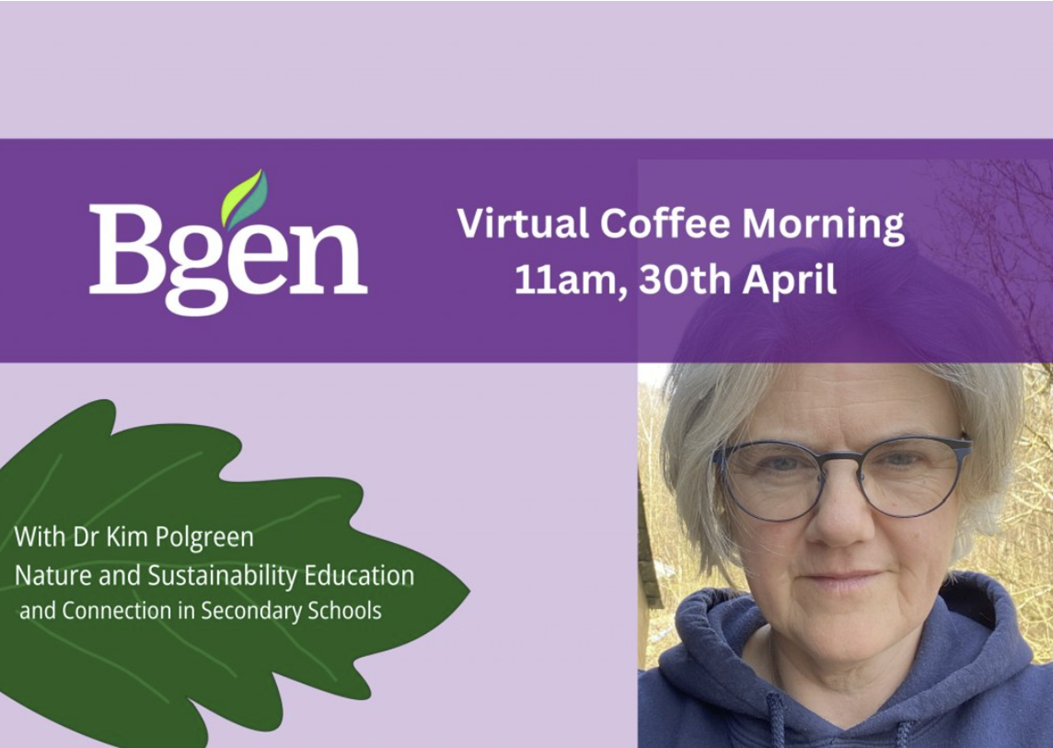
Kim Polgreen, OEA Director, gave an online talk on Nature and Sustainability Education to the BGEN group in April 2025.
This talk was on what I had learned from my work at Wytham Woods and in schools. I talked about why I focus on teenagers, the types of nature education activities I run, how I run work experience weeks for groups of students, how I work with teachers, how schools are encouraged to engage with nature education through the wellbeing benefits for students, and my involvement in a research project on Nature and Mental Health and Wellbeing in Secondary Schools.
MBA students sniffing the soil
In March 2025 I supported Dr Bettina Wittneben to enthuse a group of around 60 MBA (Masters of Business Administration) students from the Said Business School to think about the role of nature in their businesses.
The students spent an hour and a quarter in the Museum of Natural History with Bettina and an hour and a quarter with me in the University Parks. We were initially nervous about how they would receive the experience, but we needn’t have worried. Unsurprisingly they were a lovely, interested, thoughtful group of young people. I was delighted with the stories they told of their own thoughts about the natural work in relation to their work lives, and how they engaged with the questions I posed for them.
One of the highlights of the event was digging up a sod of soil and handing it round the students, encouraging them to look at the invertebrates - and sniff the soil to detect the sweetness of a healthy soil. The sensory experience stimulated further reflections and ideas.
We wrote an account of this event for the University Parks Department which they published in their newsletter. From the Superintendent's desk: Spring 2025 News | Estates Services
The Museum and the University Parks have kindly allowed us to bring another group of MBA students in 2026, and in October 2025 we’ll be bringing 80 Economics and Management undergraduate students for a similar programme.
Kim Polgreen.
Working with Bloom Education at Wytham Woods
We had a wonderful day in Wytham Woods with Jane McRae from Bloom Education and others. Jane wrote a blog about our adventures.
Glimpses of the past at Wytham Woods
The Phoenix Cinema was packed on Wednesday for the first showing of a rediscovered and soundtracked film by Hazel ffennell. The film was made in around 1924 by Hazel ffennell, who was the only child of Hope and Raymond ffennell. The ffennell family bought the Wytham Estate from the then Earl of Abingdon in 1920.
Hazel was clearly talented, witty, and wonderful community builder and educator. It is tragic that she died in her early 30’s. Following her death Raymond entrusted the estate to the University to care for its beauty and wildlife, and to use it for research, education and enjoyment by the local population. The Youth Educator in Residence role that Kim Polgreen holds, and OEA supports, helps to fulfil the terms of the bequest.
The film is clever and amusing, and for those who know Wytham well gives tantalising glimpses of views you recognise.
Oxfordshire Schools Sustainability Network event
We were back in the lovely East Lab of the School of Geography and Environment for another session with Patrick Kennedy-Williams from the Climate Psychologists, and a reporter from the BBC who was recording a piece for BBC Radio. Patrick led the participants through a fantastic session on communicating with other people about climate issues. The BBC reporter then interviewed three of the students about their thoughts on climate change. We are looking forward to hearing the piece!
Peruvian Group visit to Wytham Woods
Wychwood School in Oxford hosted a group of students from Peru and we had a the pleasure of showing them some of the secrets of Wytham Woods. About 40 students and their teachers came to Wytham and had a leisurely walk up the hill to the Chalet, led by long time Wytham researcher Stewart Thompson. They then had a wonderful carousel of activities with different researchers: an ecology walk with ecologist and educator Joe Boyle, a hands on science session on carbon capture by trees with plant ecologist Dr Keith Kirby, handling moths caught in the moth trap and looking at invertebrates under the microscope with entomologist Dr Liam Crowley, and a creative session discussing research in Peru with Peruvian scientist Melissa Felipe Cadillo. The weather was kind to us all after some cold wet days, and the students and teachers loved it all.
It was lovely to see them again at Wychwood School a few days later when we were there for a Green Careers Symposium.
With Joe Boyle, looking at the research tree canopy walkway
With Dr Liam Crowley discussing careers in entomology
Signposting Green Careers to your students: a teacher training session for OTSA
OTSA is the Oxfordshire Schools Teaching Schools Alliance. They host webinars and face to face teacher CPD events and we have been delivering a range of sustainability topics for them.
On December 11th, Kim ran a green careers session. Around 8 teachers and careers advisors attended. Key take home messages were that
In the face of increasing climate anxiety signposting green careers can help students feel that their is a future role for them in protecting a liveable future.
All future careers are likely to include some element of addressing climate impacts and solutions, so students can follow their interests and still get involved.
There are many business and organisations in Oxfordshire working towards solutions who can offer inspiration to students.
For more information contact kim.polgreen@oxfordearthacademy.org
Oxfordshire Schools Sustainability Network event
The Oxfordshire Schools Sustainability Network is for teachers and students from different schools to gather to discuss sustainability issues.
On December 6th we ran the second OxSSN event of the 2023-4 academic year. This time we had a wonderful panel of journalists talking to the students about how to effectively communicate climate change issues to people. 25 students and 6 teachers attended.
The key take home message was to use story telling techniques, find ways to connect with your audience, and keep trying.
We were very grateful for the School of Geography and Environment for allowing us to use their fantastic facilities.
The next event will be at the end of January or beginning of February. To get on our mailing list for these events, email kim.polgreen@oxfordearthacademy.org.
Wytham Woods Education Update Autumn 2023
Wytham Wild Camp for 7 - 11s Autumn 2023
Our autumn half term Wild Camp had a more energetic approach than the warm lazy summer days back in August. Manse, Russ, Julia and Charlie ran some active adventures in our Classroom with Leaves at the Mount, at the Chalet, and around the Woods. There was lots to see, including a lot of fungi!
Back at base camp
That’s the welcome tent sorted - nearly
That’s it now until Easter while the Woods slow down a prepare for spring.