"The tour at the University Parks was a unique experience. Dr. Polgreen shared her expertise which enabled me to realize a different perspective on how to approach "sustainability"." 😁😁😁.
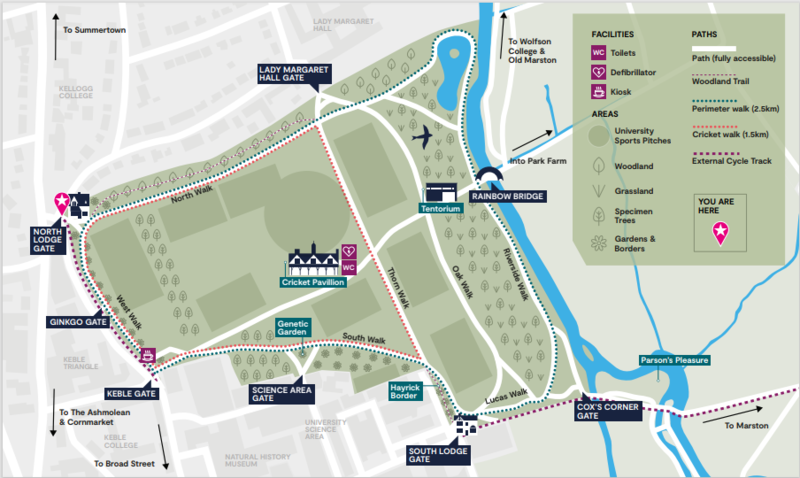
I've been taking MBA students, and Economics and Business Management undergraduates, for walks in the Park. One hour walks in Oxford's University Parks to be precise, with a peek across the River Cherwell to the beautiful river meadows beyond. It feels quite "out there" to take very busy, highly focused, business-minded students outside into nature, and talk about soil and plants and bugs. But it seems to work really well. Based on my observations and their feedback, I’ve tried to capture why.
The walk is a series of planned stops and connected conversations on linked topics as we progress through the Park. My aim is to weave a story for them through the landscape, as I learned to do teaching at Wytham Woods.
We set off from the University Museum of Natural History where the students spend the other hour of their half-day session. We stop first by the busy road and I invite them to use their senses to take in what they are experiencing. We discuss the noise, the busy-ness, the particulates that they are inhaling, and the sense of stress that these factors give us all, and talk about these in terms of externalities from the businesses and organisations that employ the people driving past on their way to work. I rescue them from this assault on their physiology, and take them into the peace of the Parks. I carry with me a copy of Prof Kathy Willis's book, Good Nature, in which she summarises the current research findings on how nature is good for our minds and bodies. I give them an insight into the impact of being in nature could be having on them right there, and invite them to compare how they feel now with their feelings by the road. We use this to discuss how we could put a financial value on the land, and how we can put a value on nature overall.
We head towards the river and stop in a wooded area where the Parks Dept allow nature to flourish more naturally than in the more manicured areas. To encourage them to notice the variety of species around them, we do the Leaf Shape Challenge – an activity to do with everyone I teach, from 5 years old upwards. The idea is for each person to find as many different leaf shapes as possible on the ground around them within a few minutes, and pick one of each. That gets them to notice the huge variety in a small space. And then I ask them to pool their leaves, and based on the shapes, work out how many different species they have between them. This gets them noticing differences and similarities. This leads into a conversation about why there is such variety, even within such a small area. We discuss the interdependence between plants and bugs, and discuss the value of the eco-system services provided to humans.
We then focus in on bugs, and dig up a sod of earth which usually causes great excitement, particularly if we find worms. It’s surprising that future captains of industry are enthralled by meeting one of the most important species on earth. We pass round the earth and I encourage them to sniff it. We talk about the micro organisms and how they break down all of natures “wastes”, the parallels with our gut flora and the robust health of gardeners. This leads to a comparison with the human economy which produces wastes that nature cannot break down fast enough or at all, leading to our waste and pollution problem, including carbon pollution. A rich discussion of the industries they work in, or are studying, follows.
Having replaced soil and worms we pick our way through the woodland to the river. There the conversation may be around flooding and the value of the flood plain in protecting homes and businesses, the value of rivers for amenity, the sewage and waste dumping scandals in the UK and where the money went, the holes in the bank caused by the American crayfish and the wider issue of introduced species and diseases due to human moving species global. We may talk about winners and losers of business activities, and justice.
Looking across the river we may discuss nature friendly farming and protecting species, the risks to humans of messing with nature, the opportunities for working with nature. By this time I’ve normally lost control of the narrative and everyone is contributing.
My concluding remark is that businesses are embedded in the natural world and every decision has ramifications for other people and other species now and for a long time to come, and a suggestion to examine what they enjoy, and what is important to them and to take that into their future work. I leave them to walk slowly back to the Museum chatting to each other.
Teaching in this way is clearly more effective than giving the same learning points in a presentation in a classroom. But there is also something about being in the Park that is impactful. I've tried to capture what I see in their reactions to the experience and what they say, and I think there are several ingredients that make this experience valuable.
1. A natural environment and a different mode of learning seem to be refreshing.
2. The conversational style and the pauses as we walk give them to reflect and contribute thoughtfully.
3. The physicality of the experience, in contrast to a largely conceptual learning experience they are used to, appears to be valuable. Using their senses, touching trees, and leaves and soil, moving, digging, and collaborating on sorting leaves, might just be firing up different regions of their brains.
4. The opportunity to connect with each other in a space which allowed for deeper conversations about purpose and meaning, appeared meaningful.
These walks are part of the Climate Leadership programme for the Economics and Management course at Oxford University, and the MBA programme at the Saïd Business School, University of Oxford. Both opportunities have been brilliantly conceived and created by Dr Bettina Wittneben, with Laurence Cranmer.