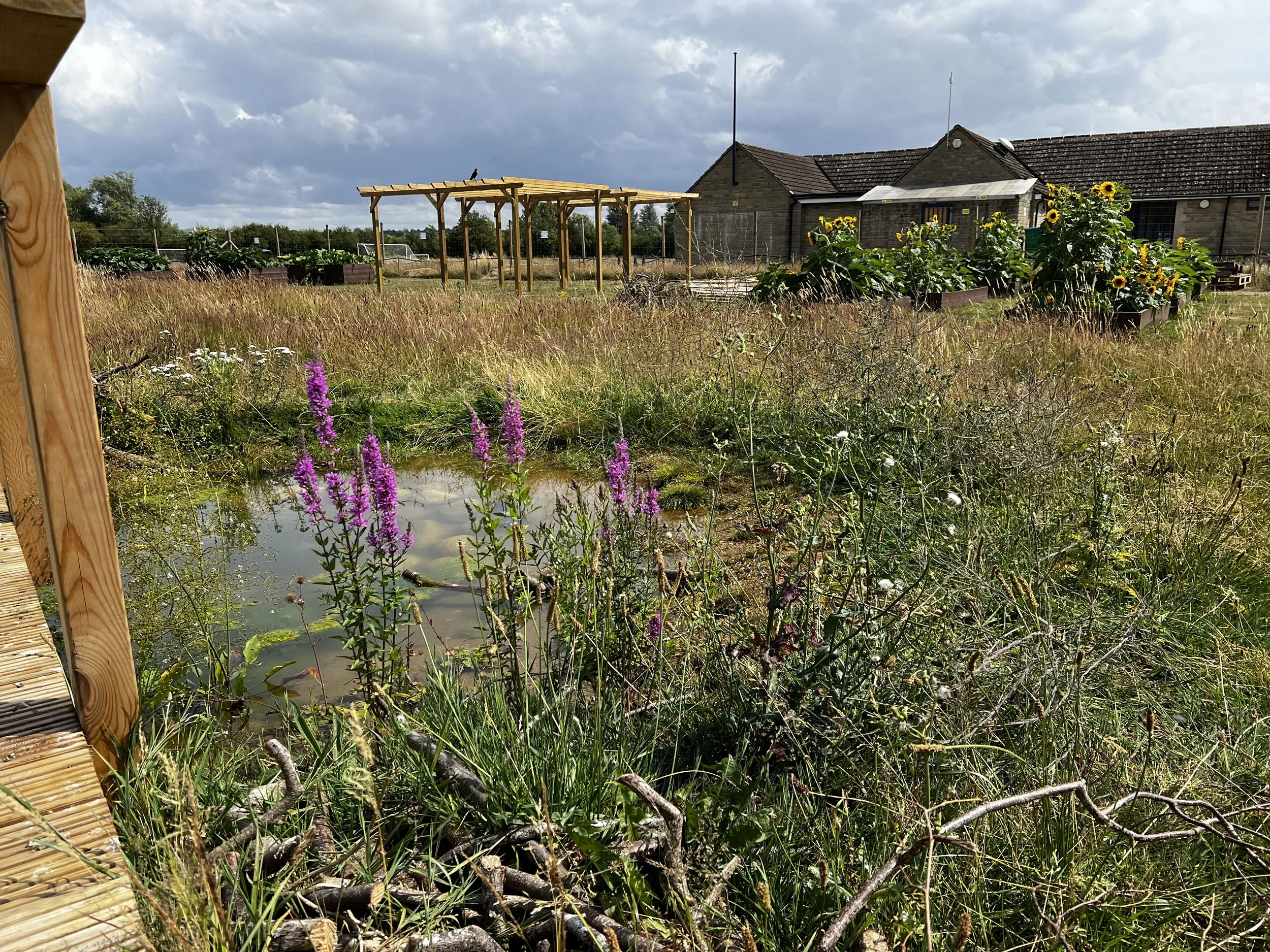
Every week Dr. Kim Polgreen runs an ecology club at Cherwell school, bringing knowledge of wildlife, biodiversity and ecology, to enrich the curriculum beyond the traditional classroom limits, encouraging experiential learning with a host of benefits, for students ages 11-18.
One of the biggest challenges of nature education is delivering meaningful experiences to mixed age groups. Many nature-based resources are often designed for younger students, which can alienate older teens by making nature engagement seem childish. Teenagers deserve nature education that is targeted to their knowledge level and delivered with respect.
Kim has a great approach to the ecology club. Sessions are calm, inclusive, and experiential. During the most recent session with a local expert birdwatcher, students slowly explored the school field, listening, observing and discussing what they noticed. Open questions such as “Why do you like bird watching?” encouraged conversation rather than ‘right’ answers. This created a space for conversation and learning with minimal pressure.
Ecological information was naturally woven into the experience by the nature educator and expert, linking observations with natural concepts such as migration, seasonal changes, and species declines. Climate change and biodiversity loss were discussed honestly, but without fearmongering, providing an opportunity for students to build their connection to nature, and a desire to protect it.
Using external nature experts in schools does provide some challenges, as they are usually not familiar within a teaching setting. Delivering interesting knowledge using engaging and accessible communication for all students is key. The students were buzzing with questions, but any ecological word could come across as jargon (migration, biodiversity, etc.). It is therefore important for experts to communicate simply and explain points thoroughly. If one student asks a question, ensure the answer is repeated and addressed back to the whole group to continue engagement and discussion.
We discussed where to go for great bird watching experiences – RSPB Otmoor Nature Reserve, and local fields around Marston, encouraging the students to continue their engagement with the natural world outside of the club.
Using external nature educators alongside nature experts and teachers provides a valuable learning experience for all involved. Outdoor teaching methods are modelled by the nature educator, whilst students can engage with new ecological concepts provided by the expert. This provides confidence for all in delivering future sessions.